I thought I was incapable of living 24/7 with other people… and yet… I spent ten weeks sharing a space without ever feeling crowded – perhaps because out there, space has no boundaries, or perhaps I simply felt entirely free…
Flavie Larouche, Writer and Team Member, Delay River Camp
This is a story about a wilderness experience. It is about the privilege of being somewhere incredibly remote with wild creatures that deserve our protection. It is about valuing such experiences for what they are. Do not ask me for catch statistics, all I can do is tell you of my experiences and what others have said. This is not a place that keeps catch records, or prices the salmon fishing on such catches, the price is based on the cost of operating in a very remote place with just one aircraft is bringing everything in… flight by flight by flight. This is wilderness fishing for a camp of guests of just six rods (perhaps 8 for private parties) at its most pure. I have worked in the outdoor travel business for 35+ years, and those years have included the emergence of Russia. Forgive me for the comparisons to the Ponoi from time to time, in some ways things are similar, in others radically different. The Delay River Camp is only as commercial as it needs to be, in order for the owner to ensure its protection. There is no ‘pressure’ from owners or shareholders to achieve ROI, this is just a special place that the new owner is willing to share, and we might be lucky to experience.
I will split my experience into sections…
Where were we
My Journey to Camp
The Camp and its future
The fishing and the fish
My reflections
This will likely be a long piece because, as always in this blog, I tell it as I have seen and experienced it.
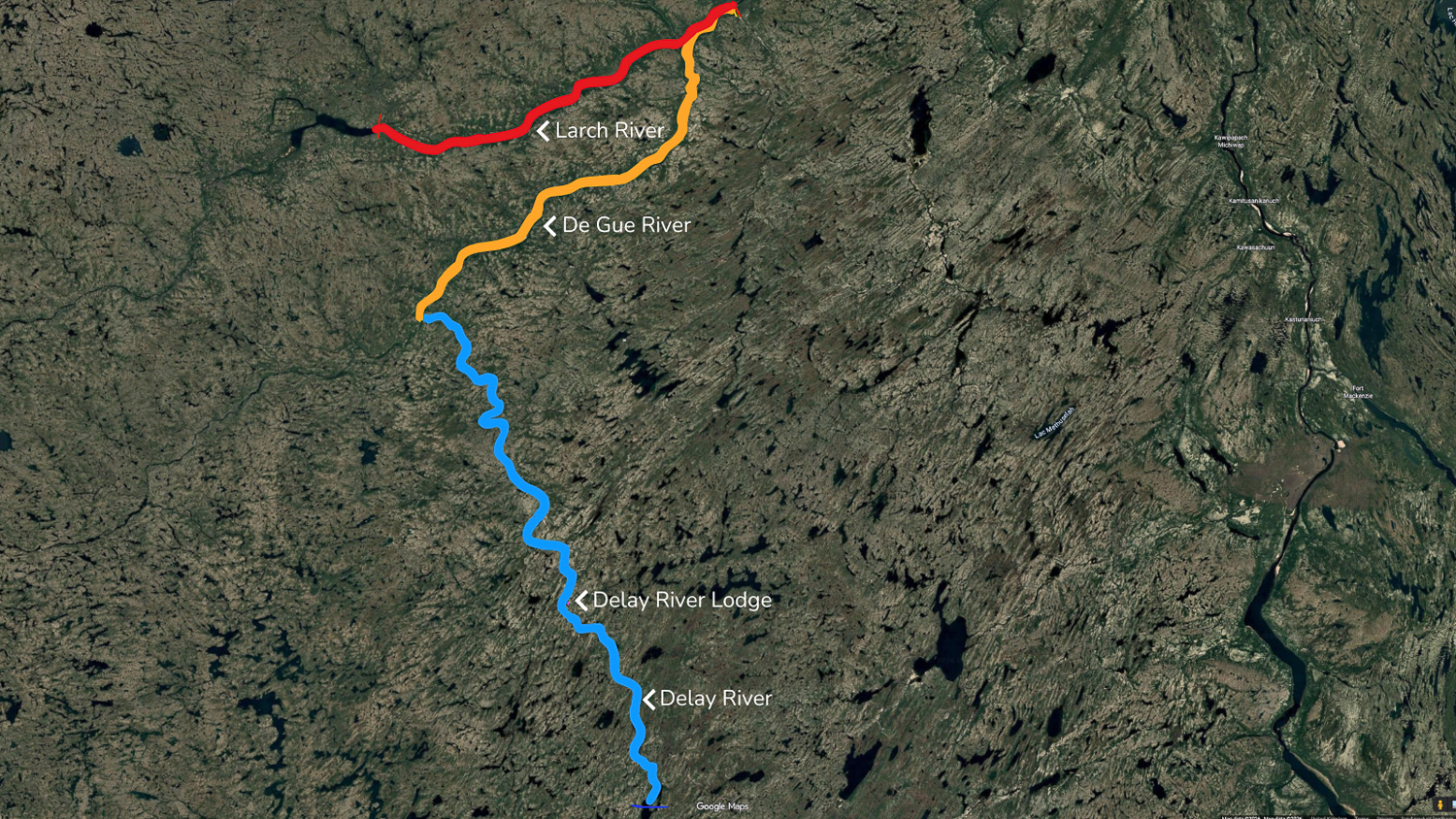
In summary, there is the following water to be fished by the current camp… travelling downstream… but the potential for overnight outpost camps, chopper fly outs etc is enormous.
The Delay itself is 125 kms
The De Gué after the Delay has dropped into it offers 75 kms
The Larch above where the De Gue meets it – 60 kms
Data based on Outfitters Licence and measured with mapsWater.com
Where were we?
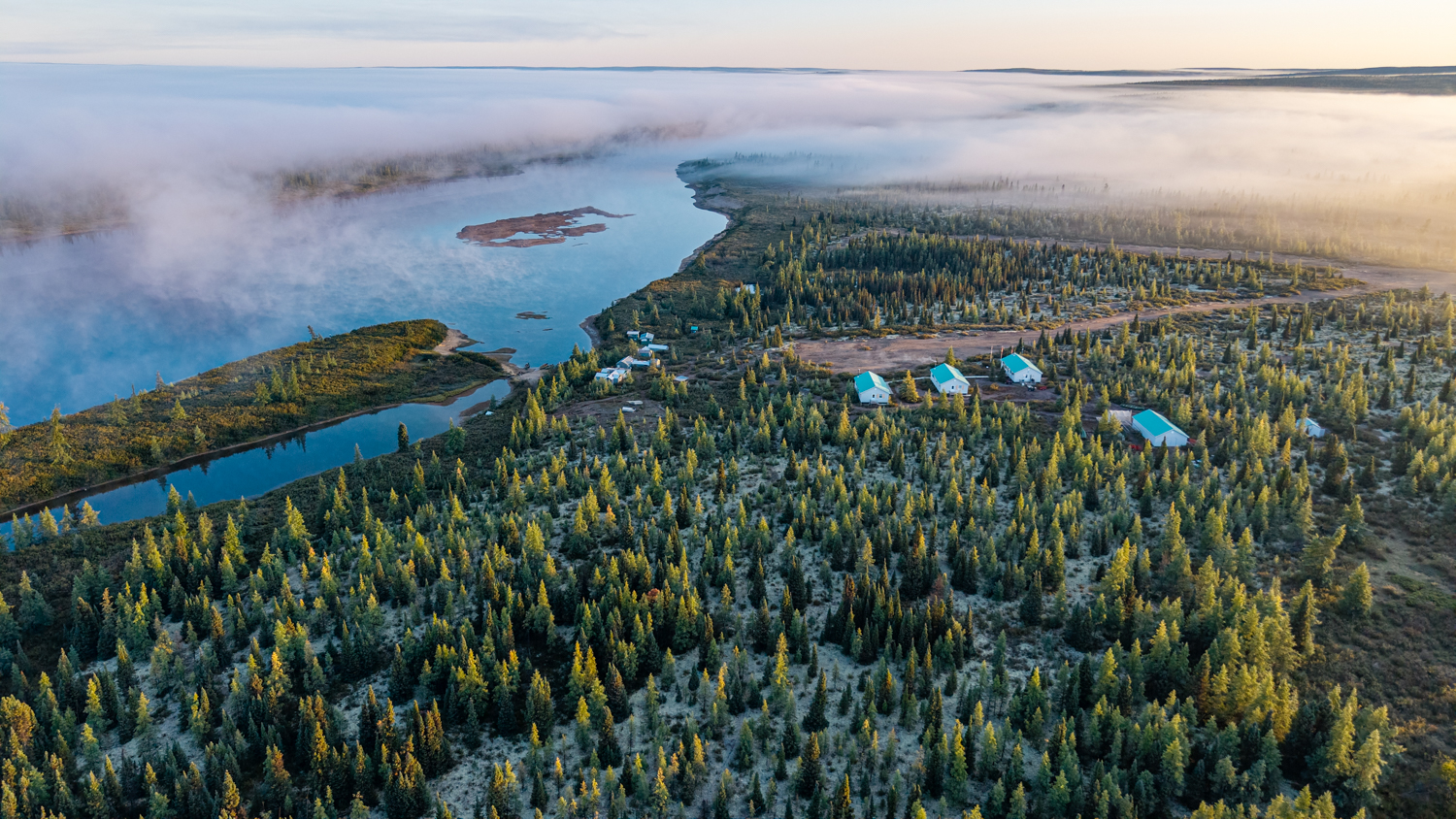
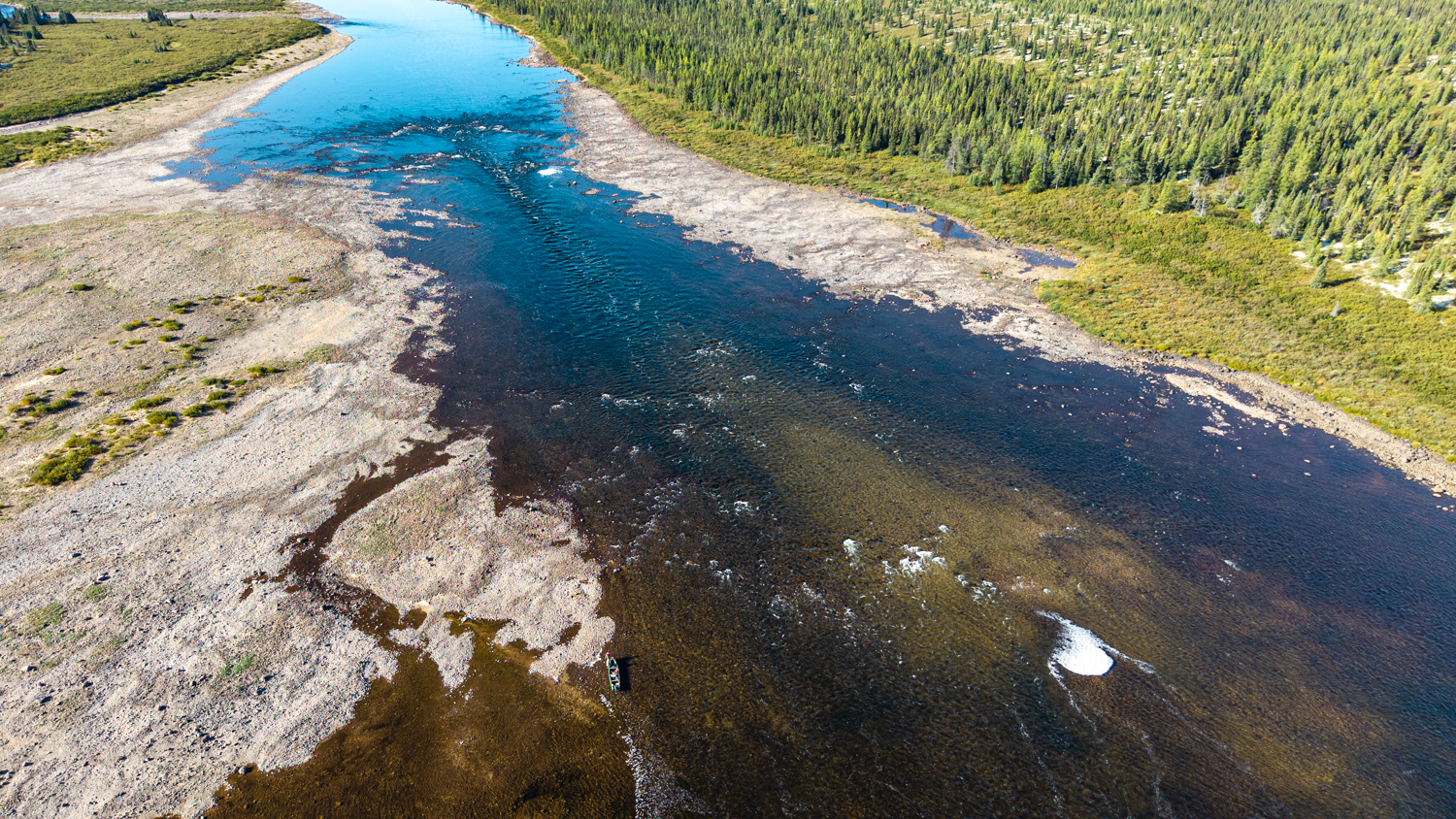
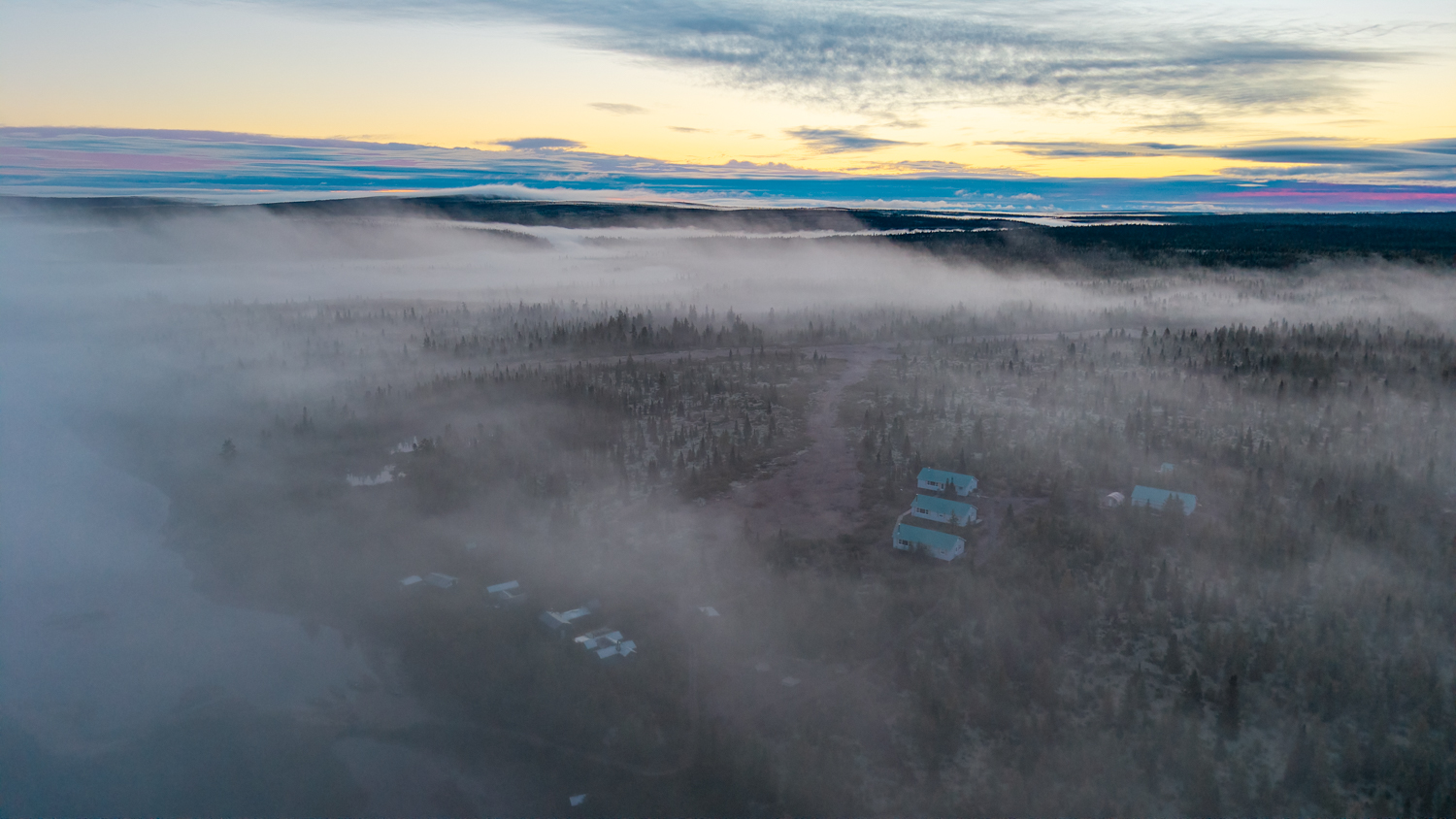
The co-ordinates of my cabin are 56.518895 by 71.074803 on the Delay river, north-east Quebec. 147.4 miles from Kuujjuaq in Ungava Bay and 772 miles almost directly north from Montreal airport to be precise. The Outfitting Permit runs from one of the lakes at the top of the Delay river to just above the junction of the Delay and Du Gué rivers plus some of the Larch into which the De Gué drops. Thereafter the river (now the Larch) is a sanctuary from the lowest point of the concession to just where the large tributary the Caniapiscau joins the Larch to form the last river name the Koksoak. Around Kuujjuaq where it reaches the estuary to the sea (Ungava Bay), the Inuit do some subsistence fishing.
These numbers do not include several Helmsdale/Naver sized tributaries that drop in along the route which all have salmon and brook trout. The closest is the Maricourt, a 20-minute walk away that you will see in some photos.
The problem is few have been to most of the fishing… ever! To quote Paul “Last year and earlier this season we travelled upstream as far as Colin’s Camp 7.1 river kms. Next year we’ll go the Rack 11.6 river kms upstream. Downstream we went to Creek á gauche (creek on the left – very productive pool) about 15 river kms from camp and Flat rock, a place that stops salmon in low water at 19 river kms from camp. There are two more places we know of downstream, Two Creeks and Eagle’s Nest which is about 28 river kms from camp.”
It is safe to say that the nearest town with any permanent inhabitants is well over 100 miles away. To be a part of ‘discovering’ over 200 kms + of remote, rarely fished, if ever, Atlantic salmon fishing in 2026 bogles the mind but, it would seem to be the case. I caveat this by making it clear that, as with any river, not every kilometre is fishable and there are large parts of slow water and indeed rapids which would not be fishable.
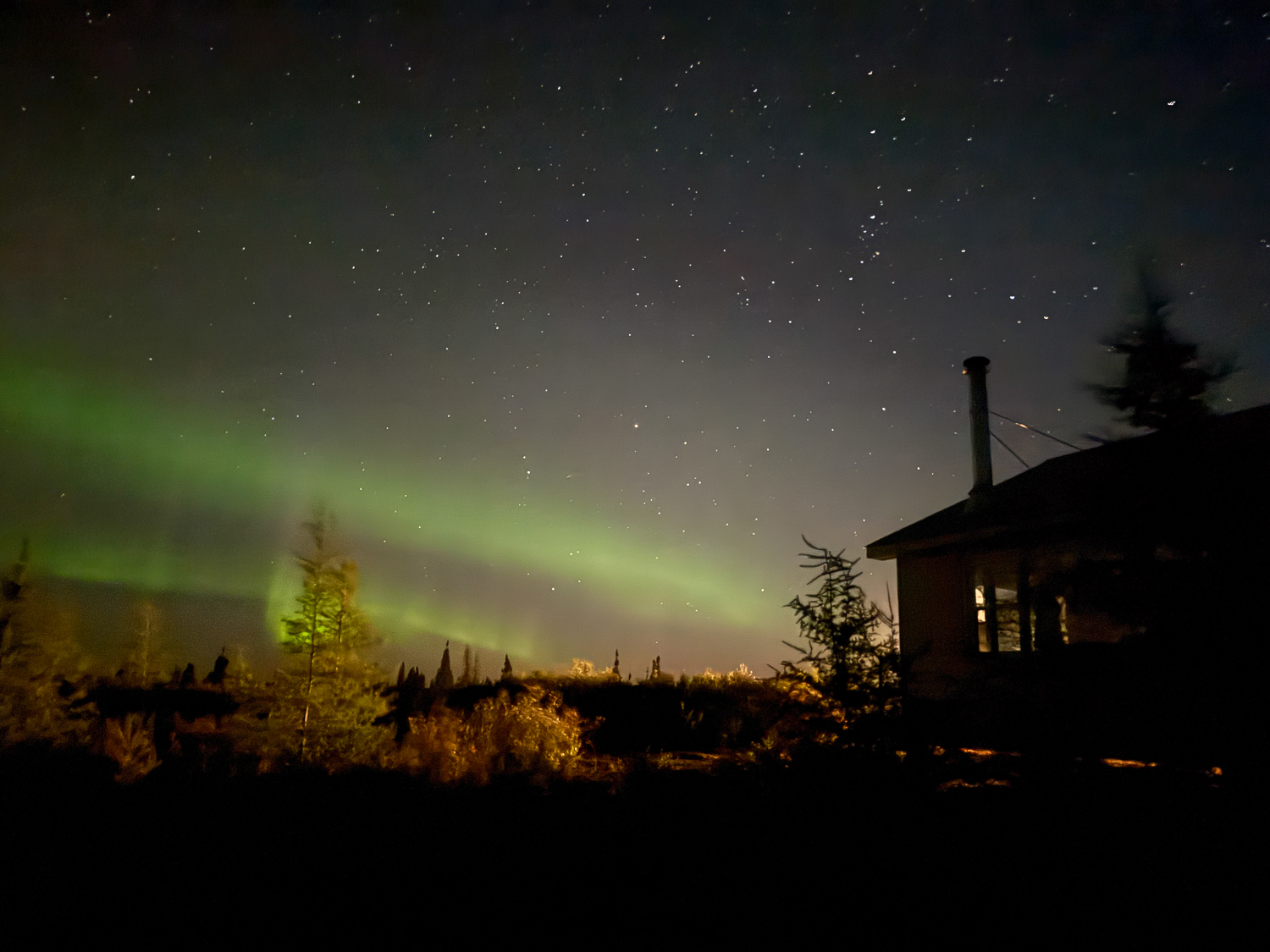
My Journey to Camp
As you may or may not have seen from my Instagram, I flew from London Heathrow to Montreal. I took off at 18.05 and landed about 8pm local time. British Airways was a disgrace in every way except the seats/cabins were fine. The lack of care and unwillingness to help was beyond belief, it was a serious case of ‘the computer says no’. However, the timings were convenient if one has no interest in seeing Montreal. On arrival, which was easy, one turns right out of arrivals and walks to the end of the terminal, takes a lift up one floor to the Airport (yes, in the airport) Marriot Hotel check-in, checks in and goes straight to sleep as it will be about 2pm UK time.
In the morning, one walks about half the distance to the Air Inuit check-in for about 8am which is about 1pm UK time so you will have been up, had breakfast etc all in a very relaxed manner. International Airlines used to be like Air Inuit. Ursula was like my Mum or my granny, she spoke to me like I was her son, checked I had everything, chatted with me, came out from her desk to direct me here there and everywhere. I felt like giving her a hug goodbye. Paul, my host, loved witnessing my surprise because he commented that the way I was treated was normal for Air Inuit. Get this – they even tag your bag to make it clear you are an outfitter client, so your bag gets priority to ensure you do not miss your float plane or whatever is awaiting your arrival. It reminded me of Finnair in the old days of Russia who used to break every rule to ensure guests reached camp or their home on time.
Security was easy and soon we were off to Kuujjuaq, the main hub airport of the Nunavik area, an area larger than France. We were fed well on the plane including their signature freshly heated chocolate cookies and free wi-fi. We collected our bags and Allison is waiting for us to re-check and weigh all our bags for the charter flight into camp. Allison is like the Mum of Kuujjuaq airport with her team of check-in ladies, and everyone knows and loves her. She bellows someone’s name who was due to be with us but had to cancel last minute. She is on it!
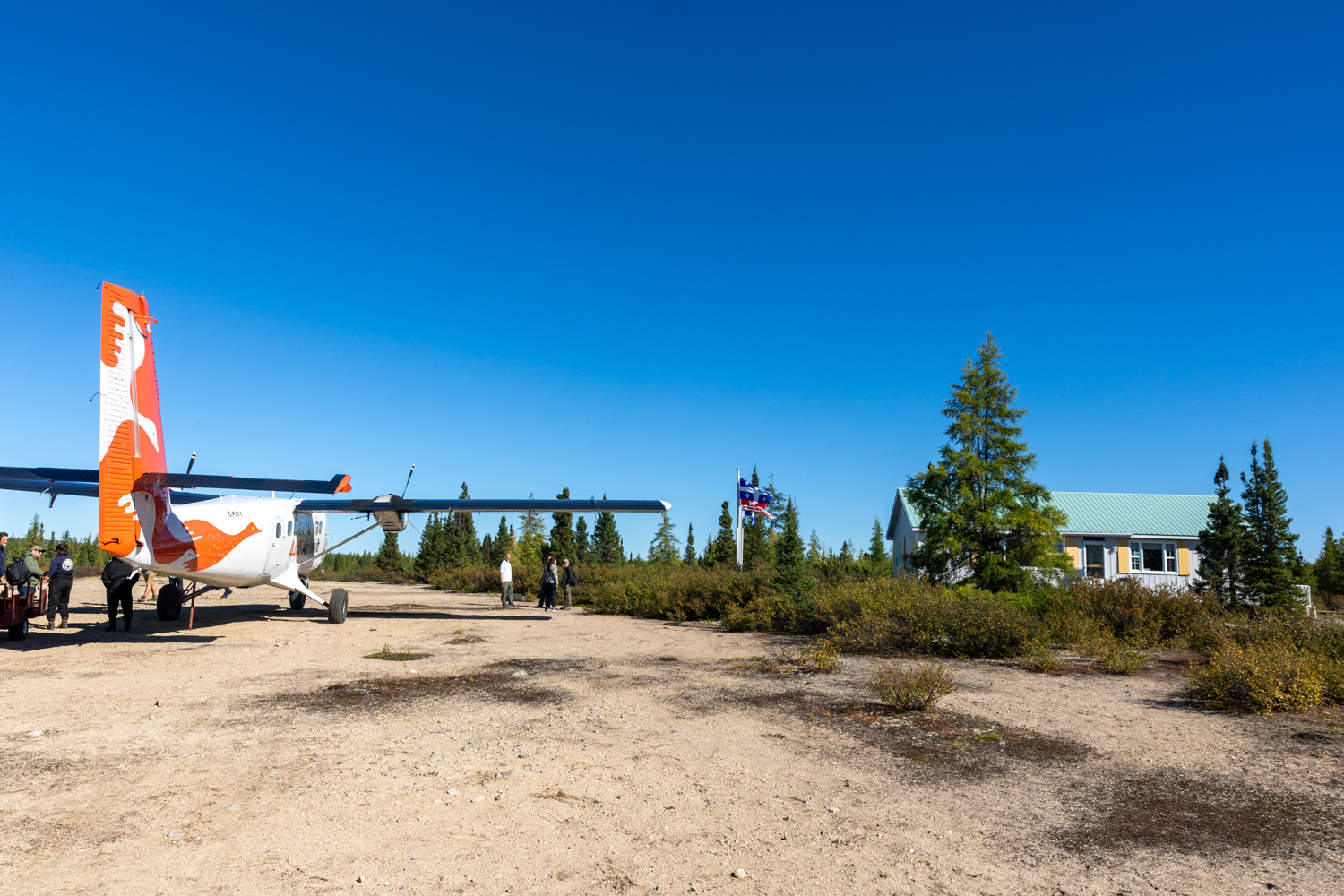
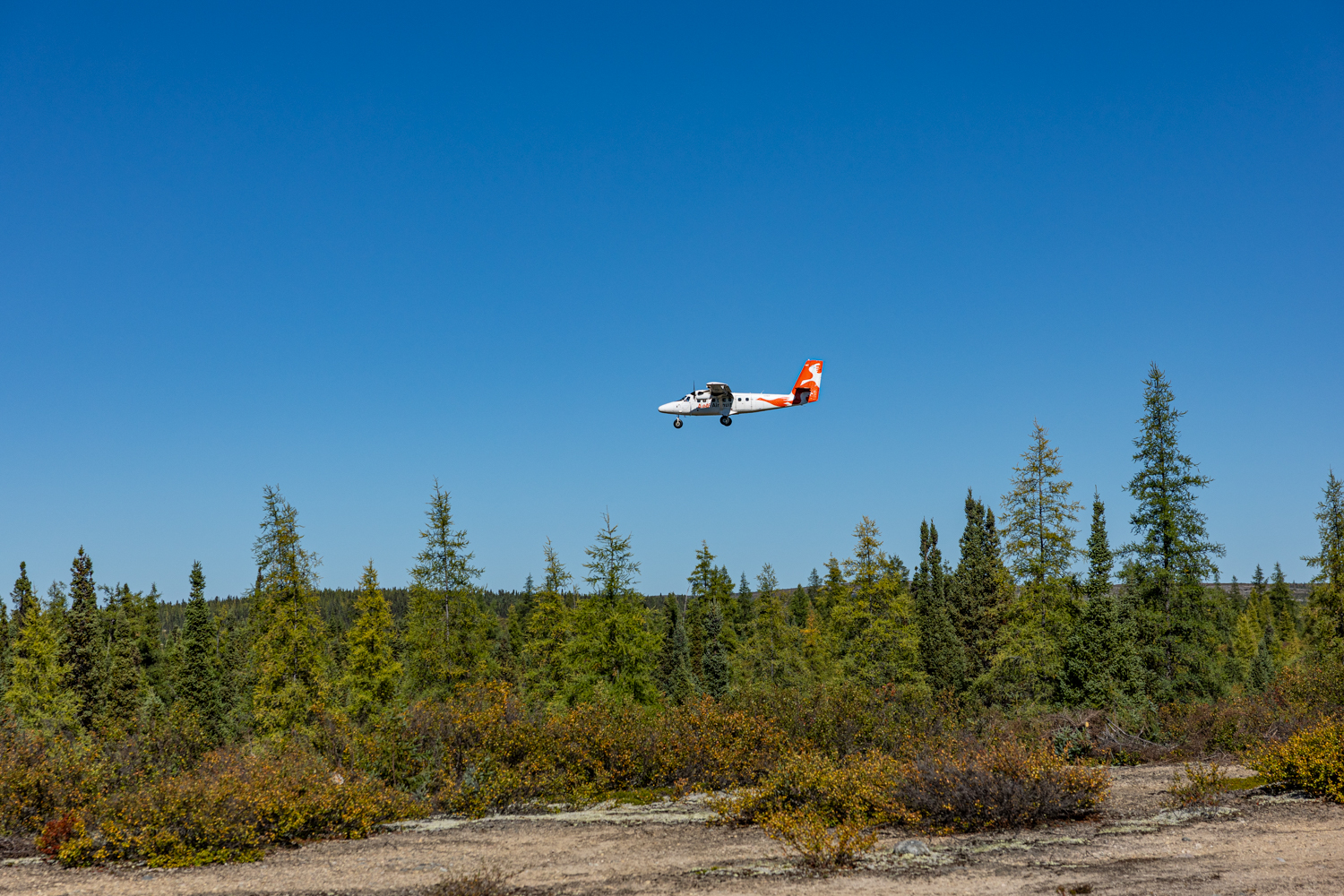
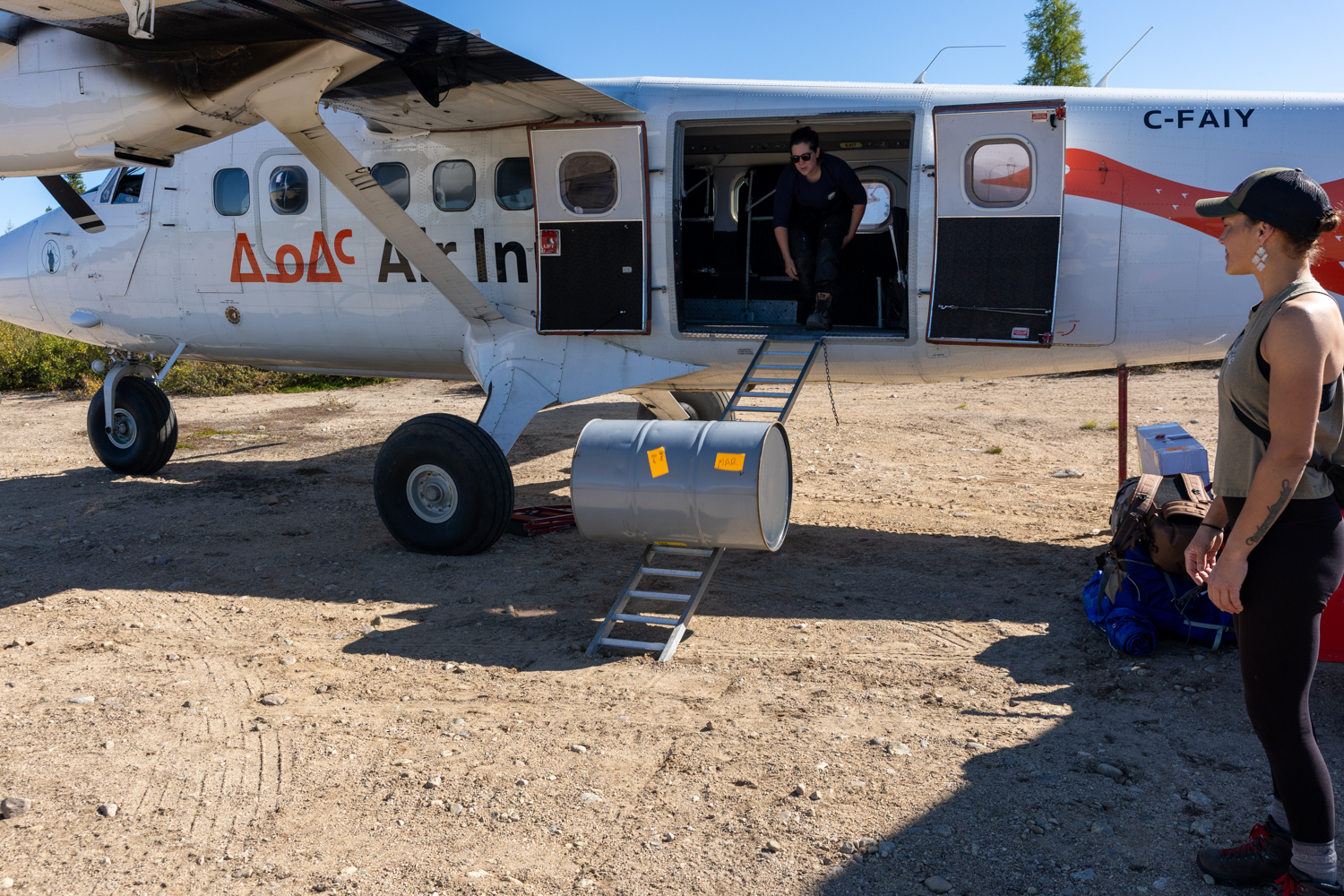
We must have been in the airport no more than an hour before we are climbing into the Twin Otter for our journey to camp. The speed with which we lifted off the US-made military grade runway was impressive but even more so was how quickly we landed at camp and pulled up literally outside our cabins. It was an hour’s journey. The twin otter has two engines (a big comfort for some, required by others) and can land and take off on a sixpence if needed but it also has instruments thus reducing the possibility of a weather delay dramatically. The concept of coming all the way from Europe to then have a two-day delay getting into camp due to rain is far more remote with a) a twin otter b) instruments.
The return was equally easy. Roxanne, the Chief Pilot, off-loaded five drums of diesel, rolling them out of the aircraft and down a ladder, and then we loaded and left. There was no smell of diesel. Back in Kuujjuaq, Allison was there hurrying us along through check-in to get the 737 launched back to Montreal. She was waxing about the Britishness of my name until she saw my Australian passport! I could have made the BA flight home with ease – we landed at 7pm and the BA flight departed at 10pm but Paul advised caution. If I had known about the twin otter, I may have been more adventurous. I over-nighted, chilled, reflected, had a massage and left the next evening.
Considering where we ended up, the journey was incredibly easy, and everyone was very kind and helpful and the differences between our world or that of British Airways were stark.
I should point out that the weight limit was 50 KG plus hand luggage – plenty for a simple camp.
The Camp and its future
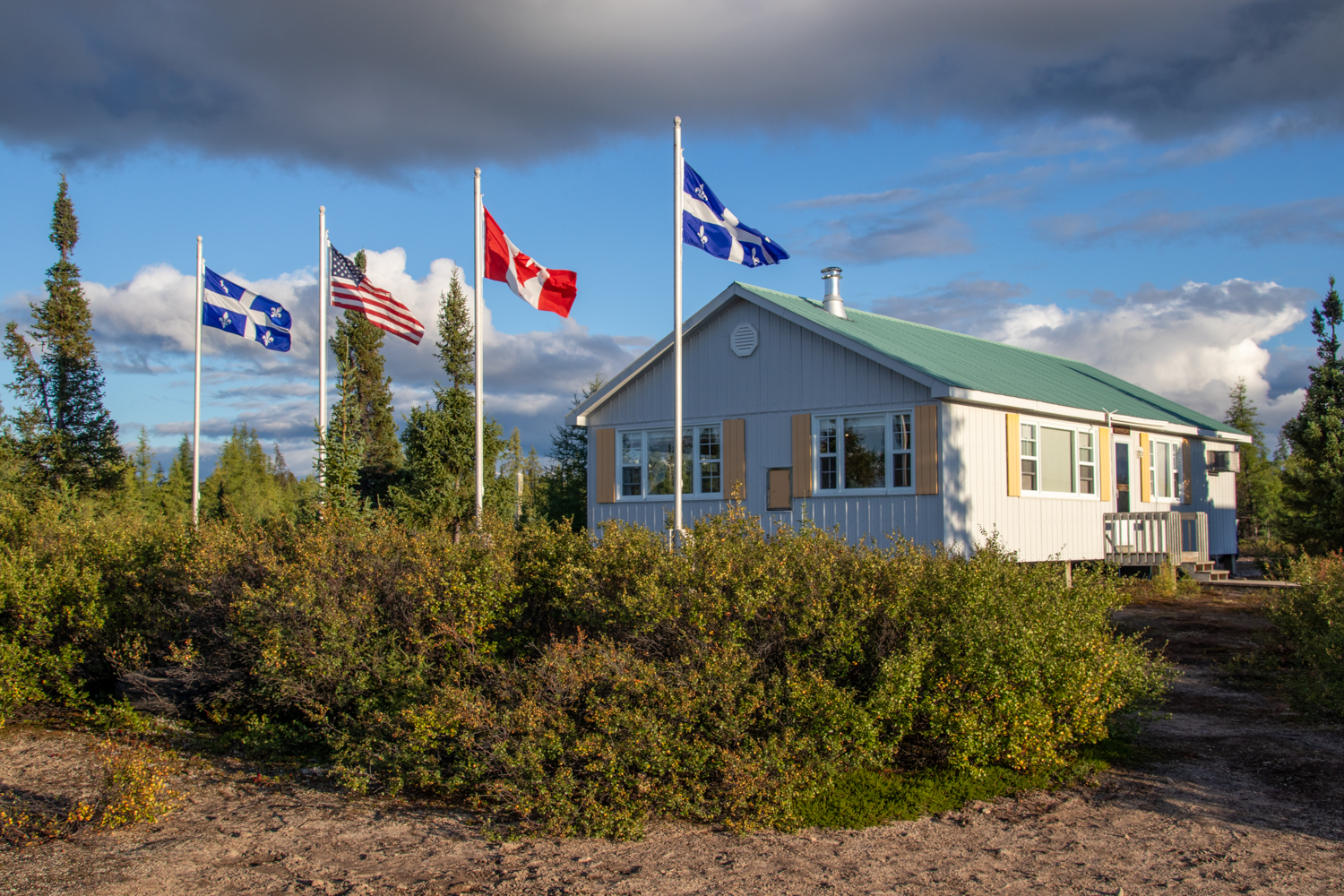
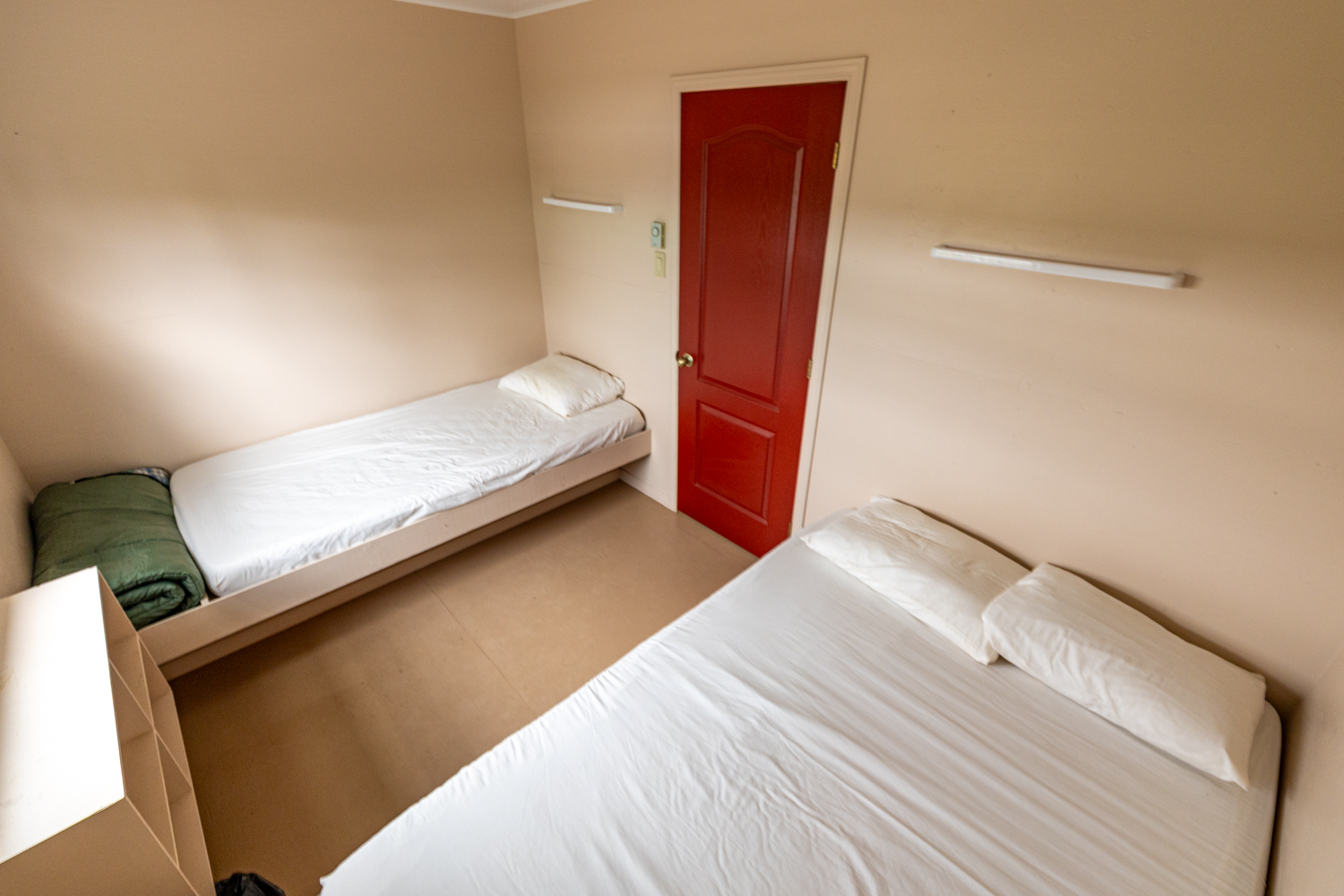
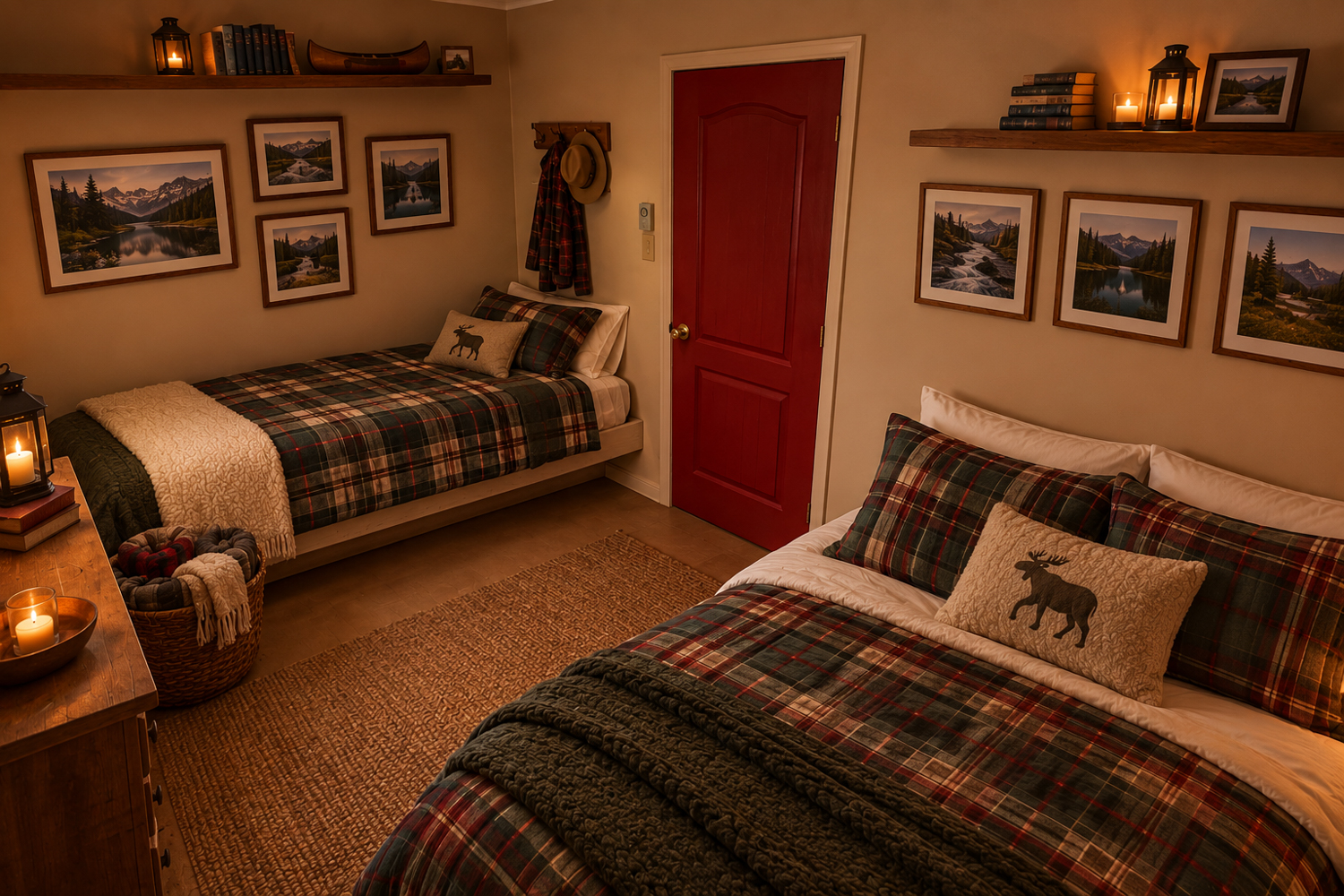
To be clear from the start, at the time of my visit, Paul did not own the camp so had not done the improvements that he and I agree are required. His primary focus is on two areas, making his staff comfortable and giving the guest cabins ‘a woman’s touch’. Below you will see pictures of the rooms, but I have equally tried to prepare (via AI) what the rooms may look like and these images are shown below. The lodge is/was owned by a wealthy Canadian family who built the lodge as a hunting camp for caribou hunting. Seven years ago, the authorities stopped caribou hunting because the numbers had reduced (a 50-year cycle based on vegetation pressure) so the camp had lost its purpose. People used to hunt and if they achieved their objective, they would do a little fishing around camp. Paul saw the potential for a fishing lodge. There are records of people fishing from this location as far back as the 1980s and there are remnants of the old camp. Lee Wulff was quoted to have said “The Delay may be the last great unspoiled salmon river of this continent and therefore of the world” and the amazing thing is that from a salmon fishing point of view time seems to have stood still and his statement remains true today.
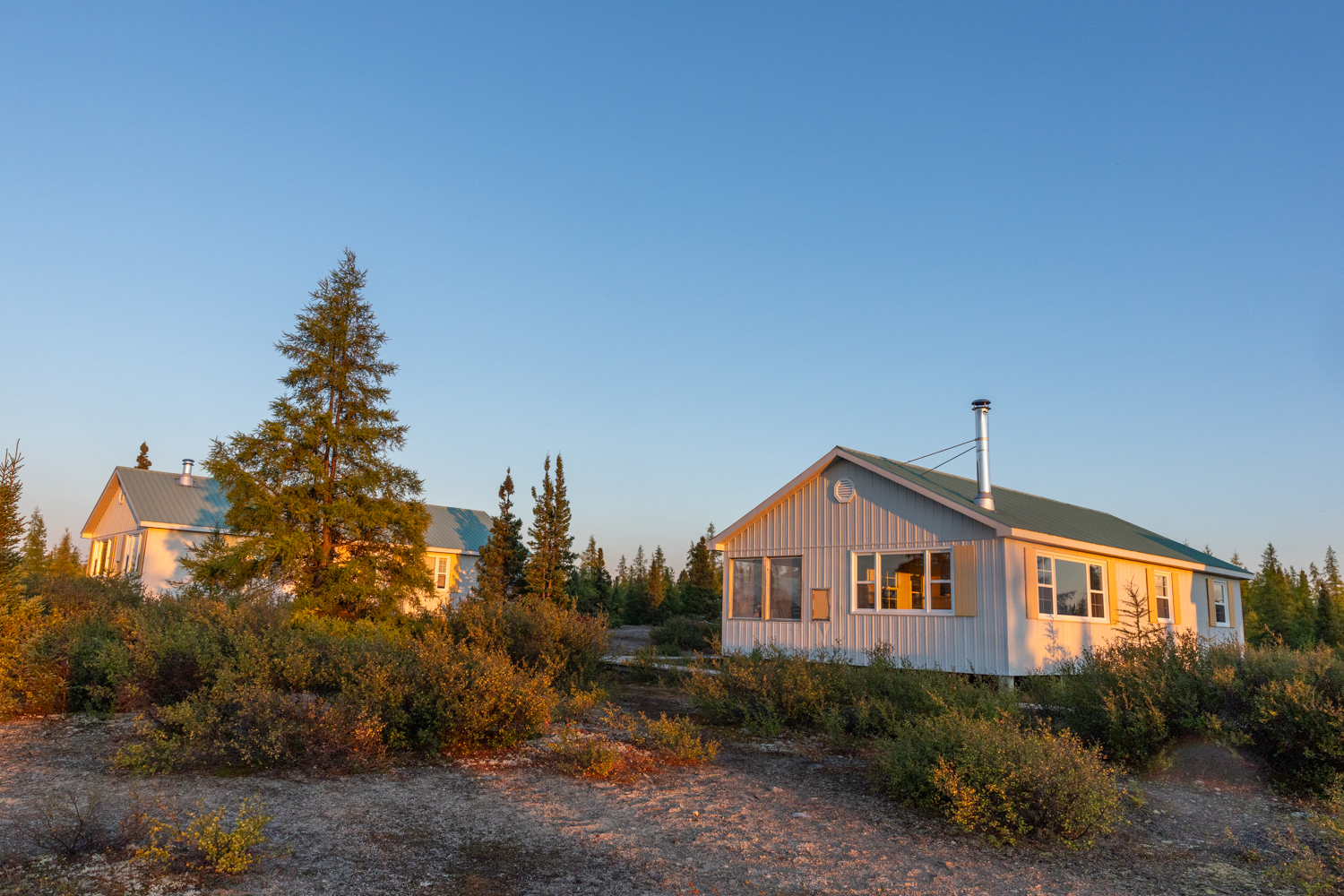
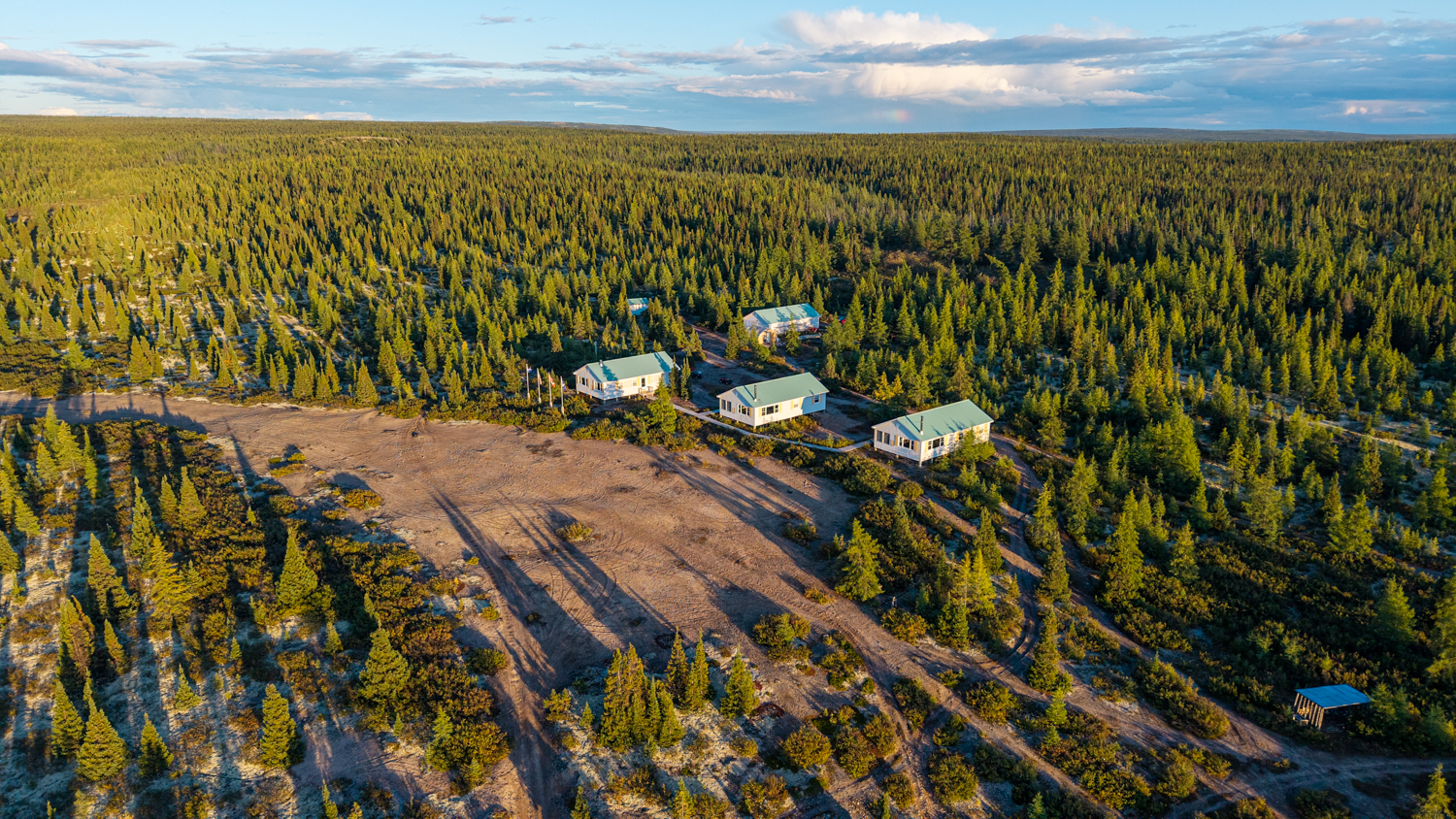
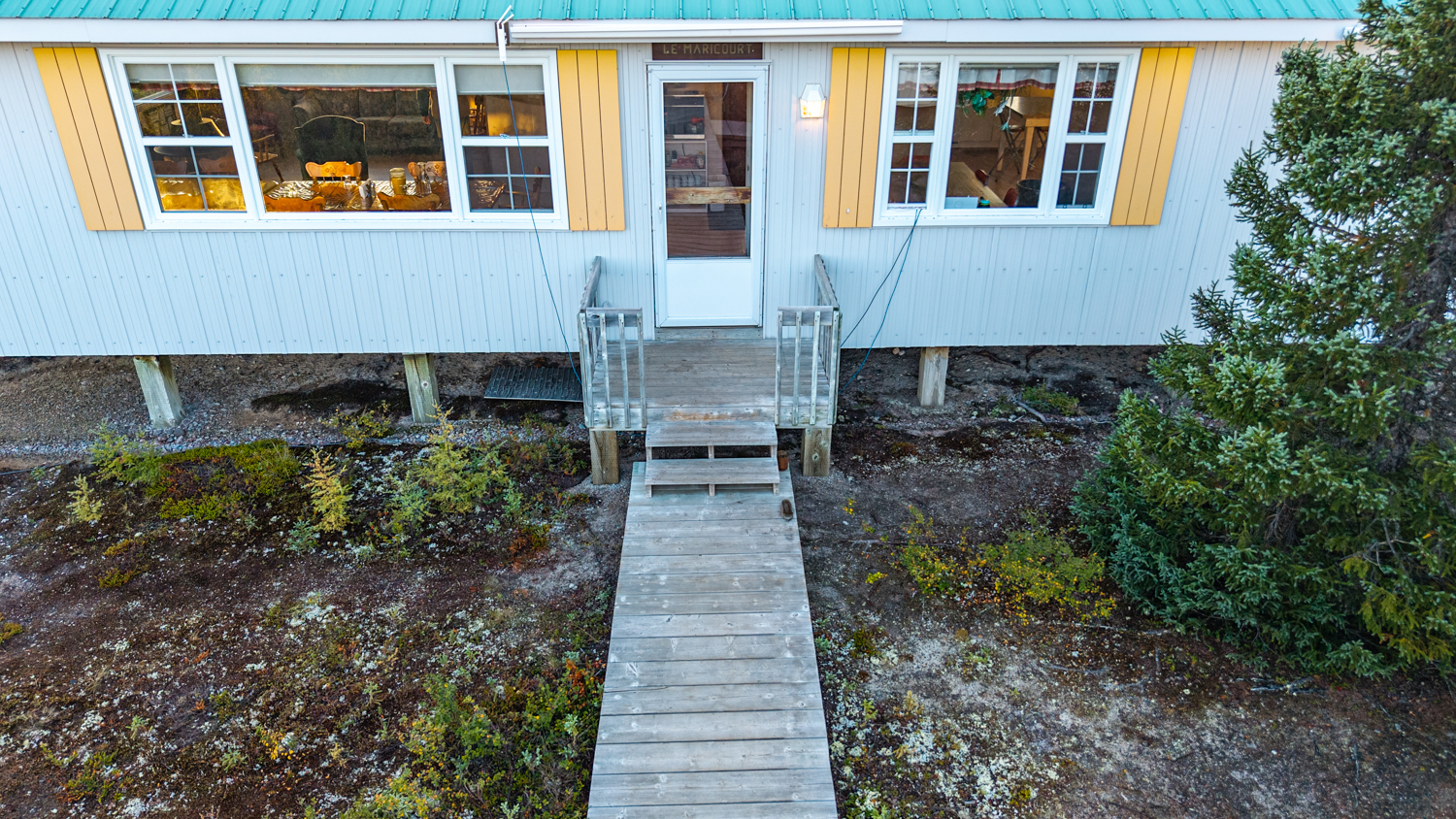
There are two guest cabins, each identical. Each has three bedrooms with a double and single bed built into the room. There is copious amounts of hanging space and some small shelves. The plan is for each guest to have their own room thus six guests and six rooms. Each cabin has two bathrooms. Paul felt that he needed to add a bathroom, but, having seen the set up, I am not sure I agree. Two bathrooms (with WC and shower in each) is not a hardship for three people. If there is a lady in camp, Paul would assign one of the bathrooms to them leaving two guys sharing one bathroom or a couple using one and the single person having the other to themselves. Between the bathrooms and bedrooms is a broad corridor with more hanging space and storage shelves. Given the simplicity of camp, there is more than enough space for clothes etc in the rooms or outside for coats and jackets. Added to this corridor, there is a large sitting area with a stove, semi-kitchen to make tea, a large fridge, sofa, armchairs etc and a large table and chairs. They have a good system for wood storage for the fire. Then outside that is a screened off porch with yet more hanging space and seating and a table. Each cabin has two exits, one through the screened area and one of the other end of the corridor. The stove has purpose built hanging space from the ceiling around it for drying. The family that built these cabins thought them through. A list of discussed improvements appears at the end of this blog.
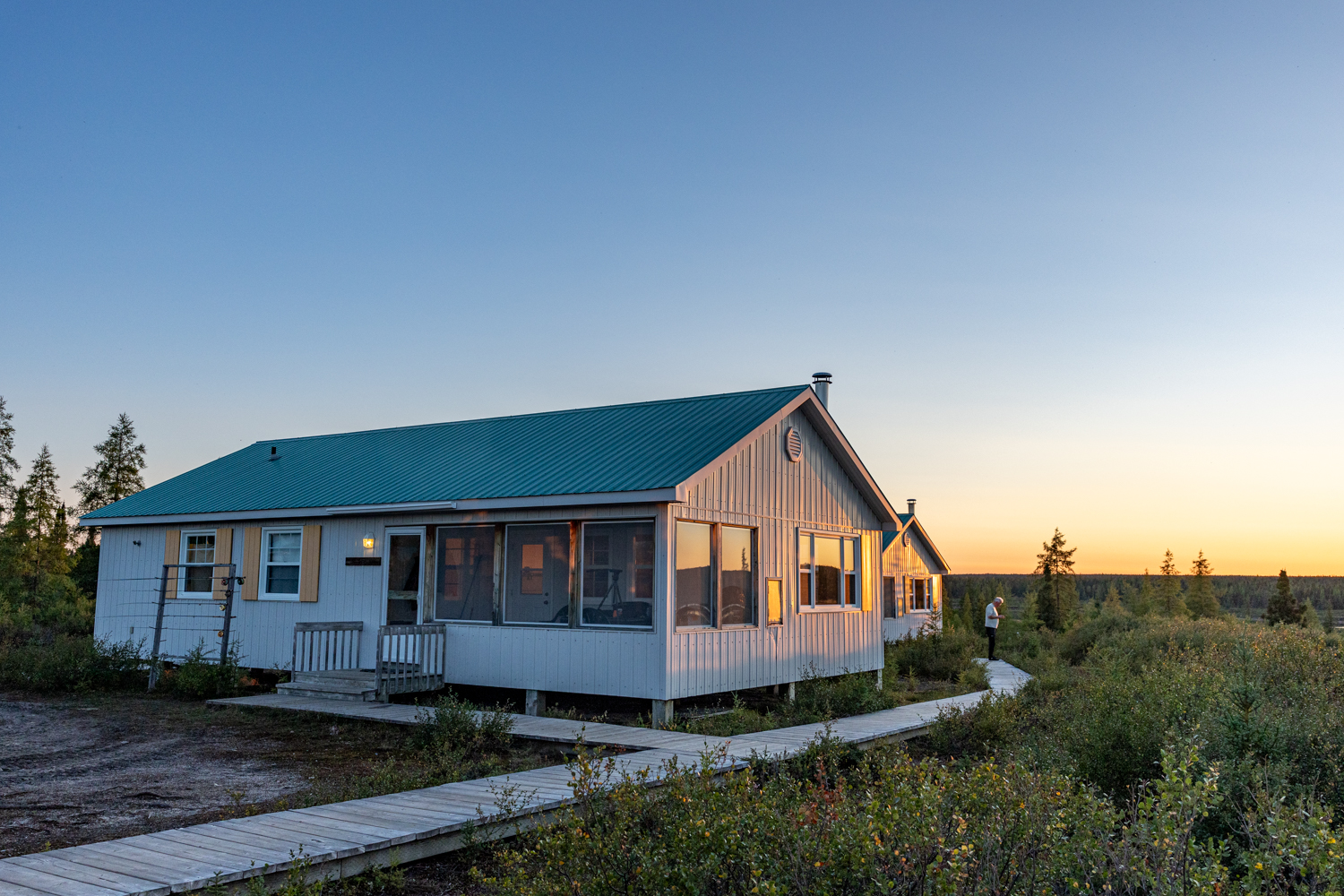
There is a third similar sized cabin which is the hub of the camp. As one enters, on the left is the sitting/dining area with a small bar, and on the right is the service area, the laundry, kitchen etc. Tempting as it is to go in and chat with the lovely crew, they ask you not to for hygiene reasons. The ‘hub’ cabin could do with some adjustment too per the list below but again cosmetics, not anything major. They have Starlink Wi-Fi in camp.
Tania and Flavie oversaw the cooking which was perfectly good home cooking for a small team of rods in a remote fishing camp. They took great care to feed us well and were very willing and flexible to adjust to personal tastes. To make things even simpler and easy for them I have suggested they simplify breakfast which was an elaborate menu each day to which they went to great effort. For lunch I also suggested some simplification. For breakfast I suggested they serve their muesli with fruit and yogurt or oatmeal/porridge (with the option for brown sugar of course!) plus fruit, eggs to order (with bacon) and toast with butter, jams and honey would satisfy most and would reduce how many would need to be in the kitchen in the morning. For lunches, a simple questionnaire on preferred sandwich ingredients before arrival so they have the correct ingredients in camp and then everyone can make their own sandwich to their own taste (with accoutrements like black pepper, mayonnaise etc) before or after breakfast and take the number of drinks, apples, oranges, KitKats, Mars bars etc they want is the way to go. That way everyone gets their perfect sandwich every day! If the kitchen could focus on baking some cool breads for each day, that would be even better. Dinners were pretty good wholesome meals ranging from steaks to beef to some really good lasagne etc and always piping hot and delicious. Vegetables are always a tough in remote lodges but they did well with fruit and veg.
All the cabins have boardwalks between them which are in great condition. They can be slippery on a frosty morning, but I think that will be addressed too. There is a short walk down to the boats in the morning, shorter than to the boats at Ponoi and there are quad bikes to carry heavy bags if need be.
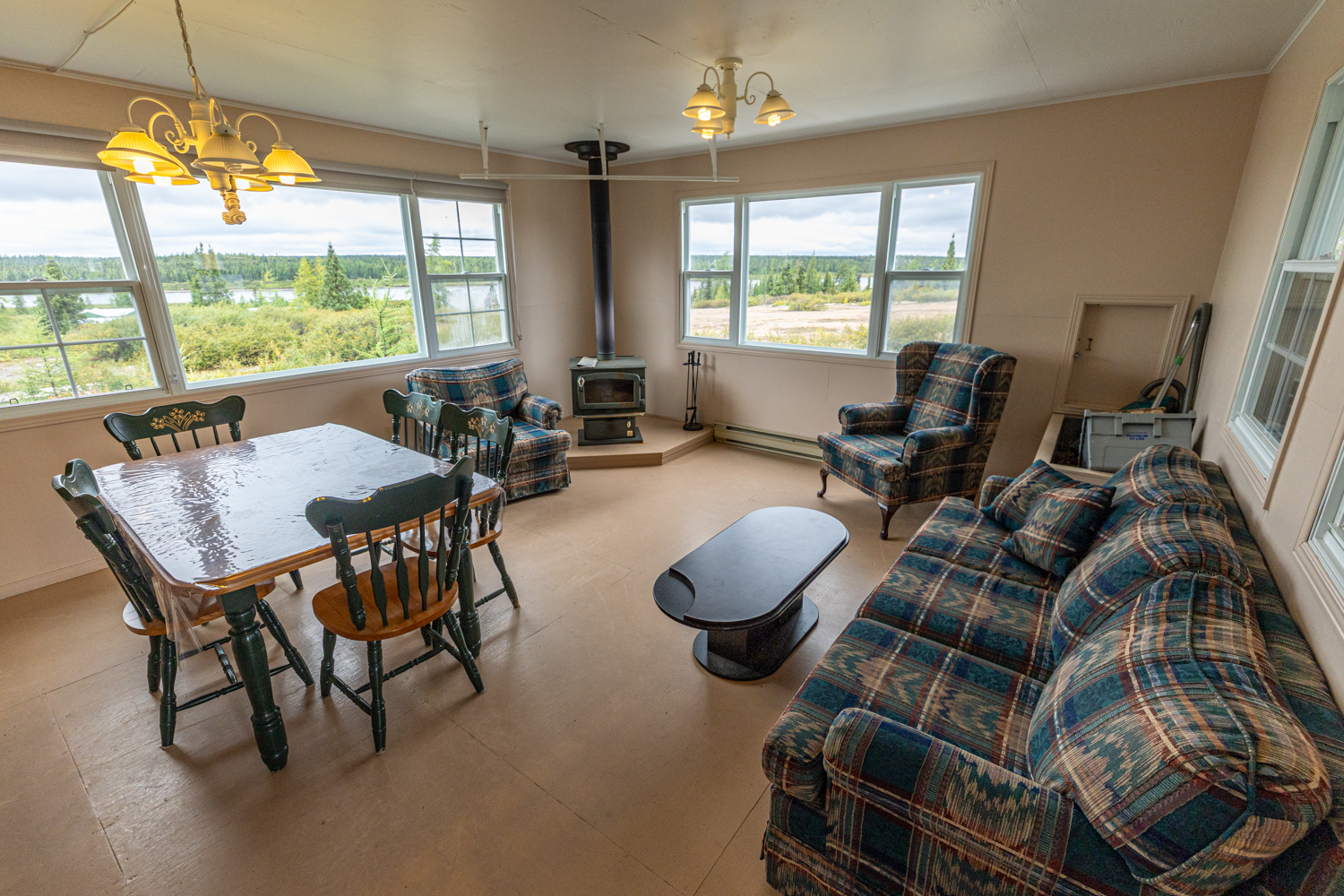
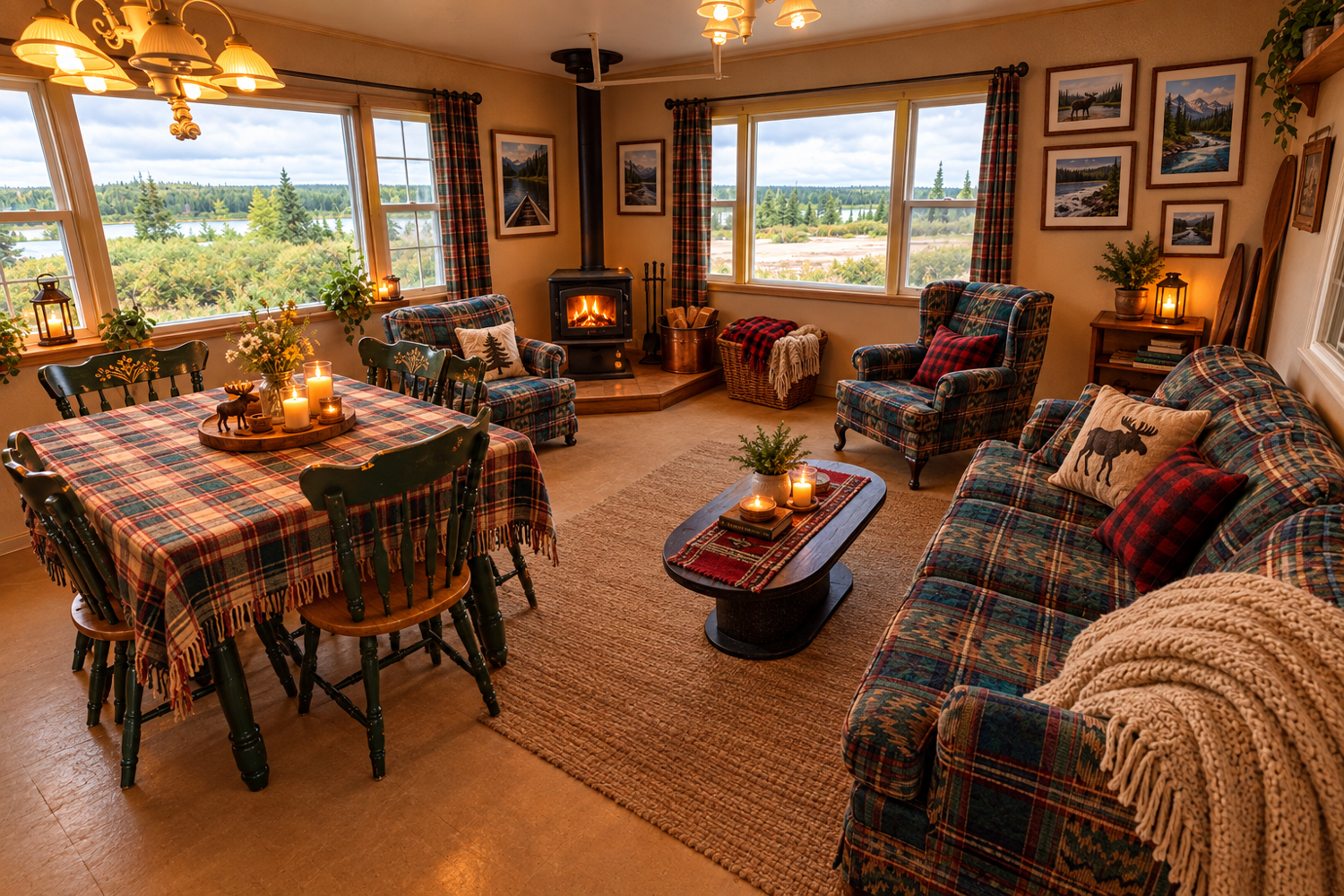
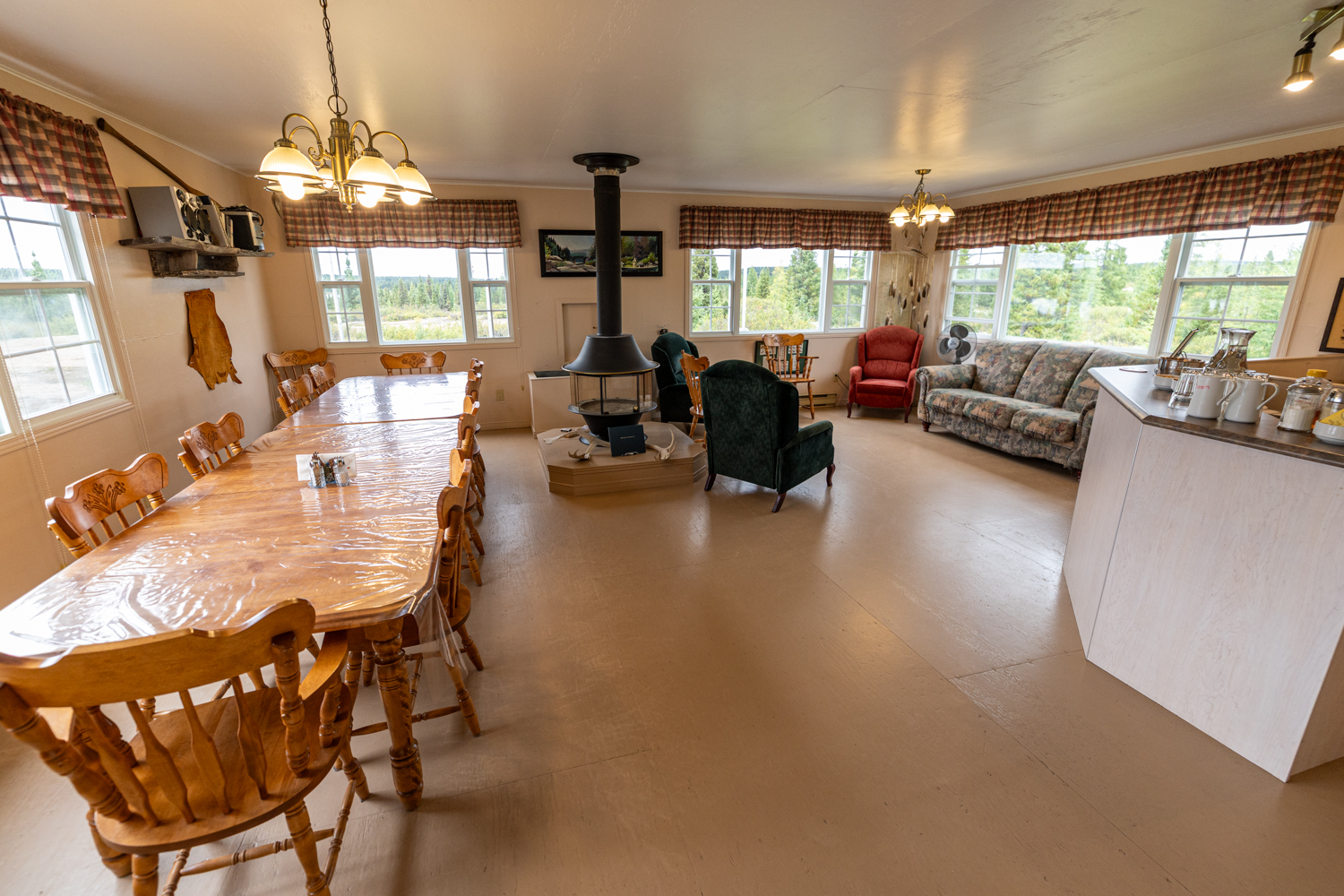
In summary, for a rehearsal season, things ran very well and the potential for a simple, relaxed but good standard of accommodation and comfort in such a remote place is excellent.
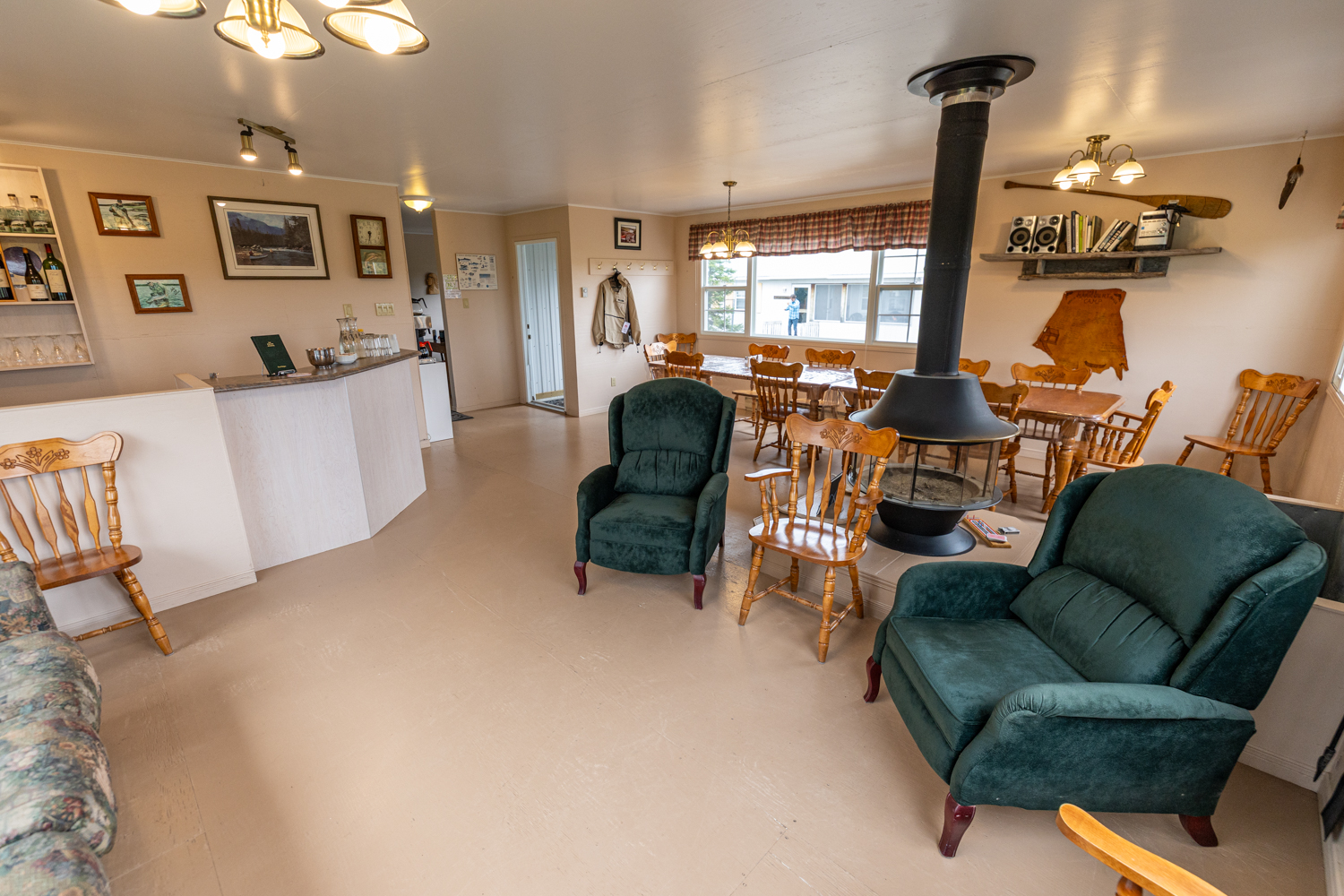
The Fishing and the Fish
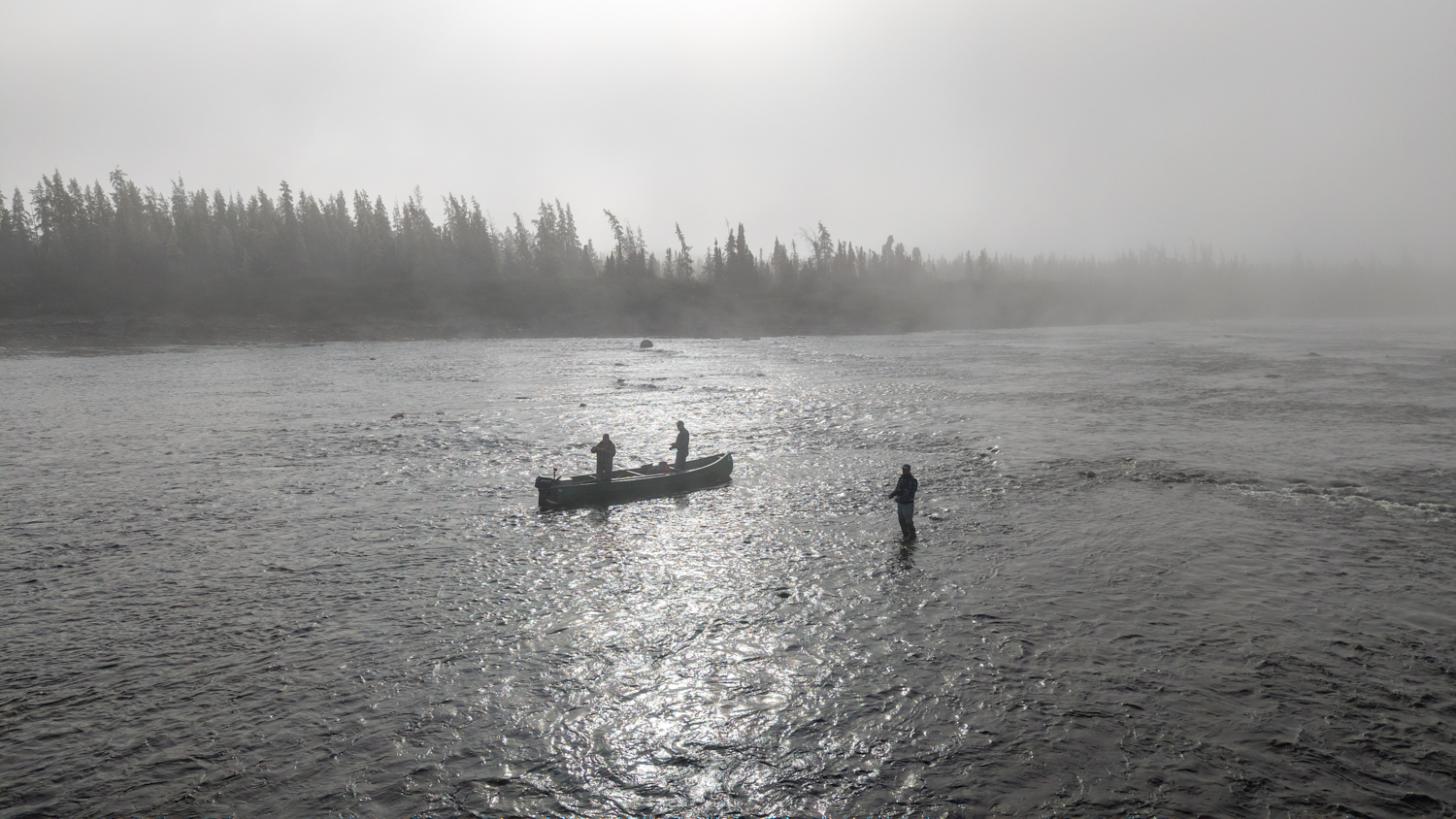
The current boats are traditional (and very expensive) canoes that are used on many east coast rivers. They have propeller engines at present though there are two brand new jet engines in camp. For covering the water that we did and a little further afield, they are perfectly adequate but for longer journeys they would be too slow and potentially not up to some of the rapids that may need to be navigated. The team are examining the idea of John boats like those used on Ponoi with jet engines. The canoes are not ideal for two people to fish out of but to be honest, two people fishing out of a boat was entirely unnecessary when I was there and given all the guides comments about the lack of need for much wading, it sounds like the need for two people to fish in a boat is rare in general. The need is more to get around and drop people off and/or to use the boat as a platform for a less strong wader to cast from. The boats need sorting in terms of equipment. This year every guide had different gear in their boat, next year everyone should have the exact same cooler/toolbox set up etc.
Before we get to the most interesting part of this blog… the fishing, I want to address the guides. By definition of the longevity of the camp as a fishing operation (a few weeks over two years) the guides are inexperienced in terms of knowing the water. Their knowledge has been further hampered by this year being unbelievably low water which ultimately restricted movement down to two or three places. At this stage, guests should not expect ‘on the shoulder’ guiding and the main reason for this is not laziness but it simply does not seem to be in the eastern Canada tradition. In this fast modern world of fishing, we think of a guide on our shoulder chatting away, giving instructions where required and buzzing about with high energy. If we have been in the Seychelles, we witness them diving into the lagoons to untangle GTs from coral heads etc. A fishing guide in Quebec seems to be more literal to the word ‘guide’, they will take you to suggested spots, they will give ‘guidance’ on flies and where to fish etc and then they will keep watch over their two guests in terms of safety (falling in etc) and the netting, handling and release of fish (which they get A* for). Are they going to talk you through casting angles, detailed up and downstream mending etc… unlikely at this stage and I would go even further to say that they will focus on their guests and are unlikely to come running to help another guide’s guest etc unless in emergency. We had many conversations about this in order that I write this paragraph accurately to arrive at the correct expectations. I am sure things will evolve but I feel this is a fair description to date in terms of what to expect. It is certainly not laziness; I saw them working in camp and they helped me considerably to get the video and photos I did.
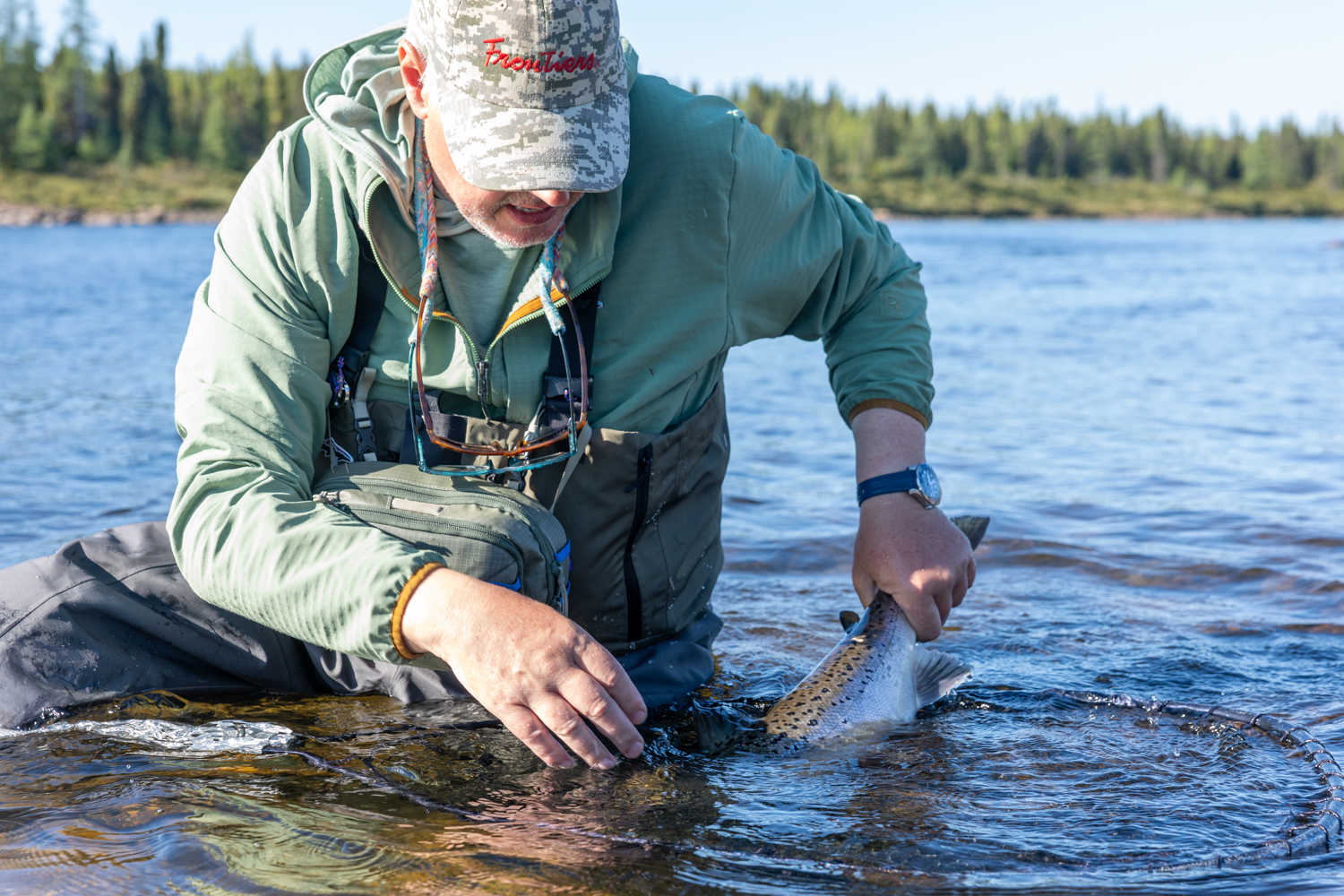
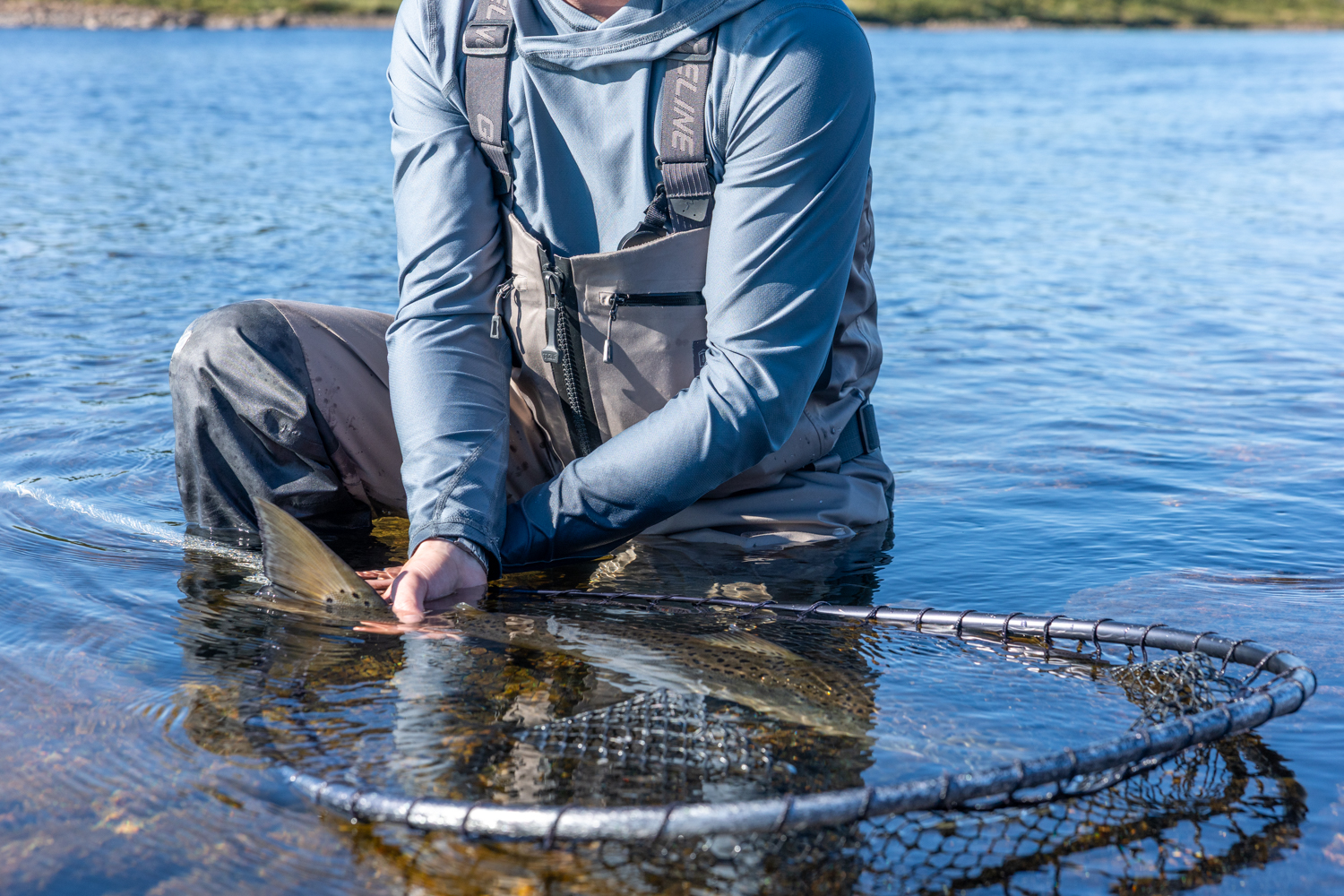
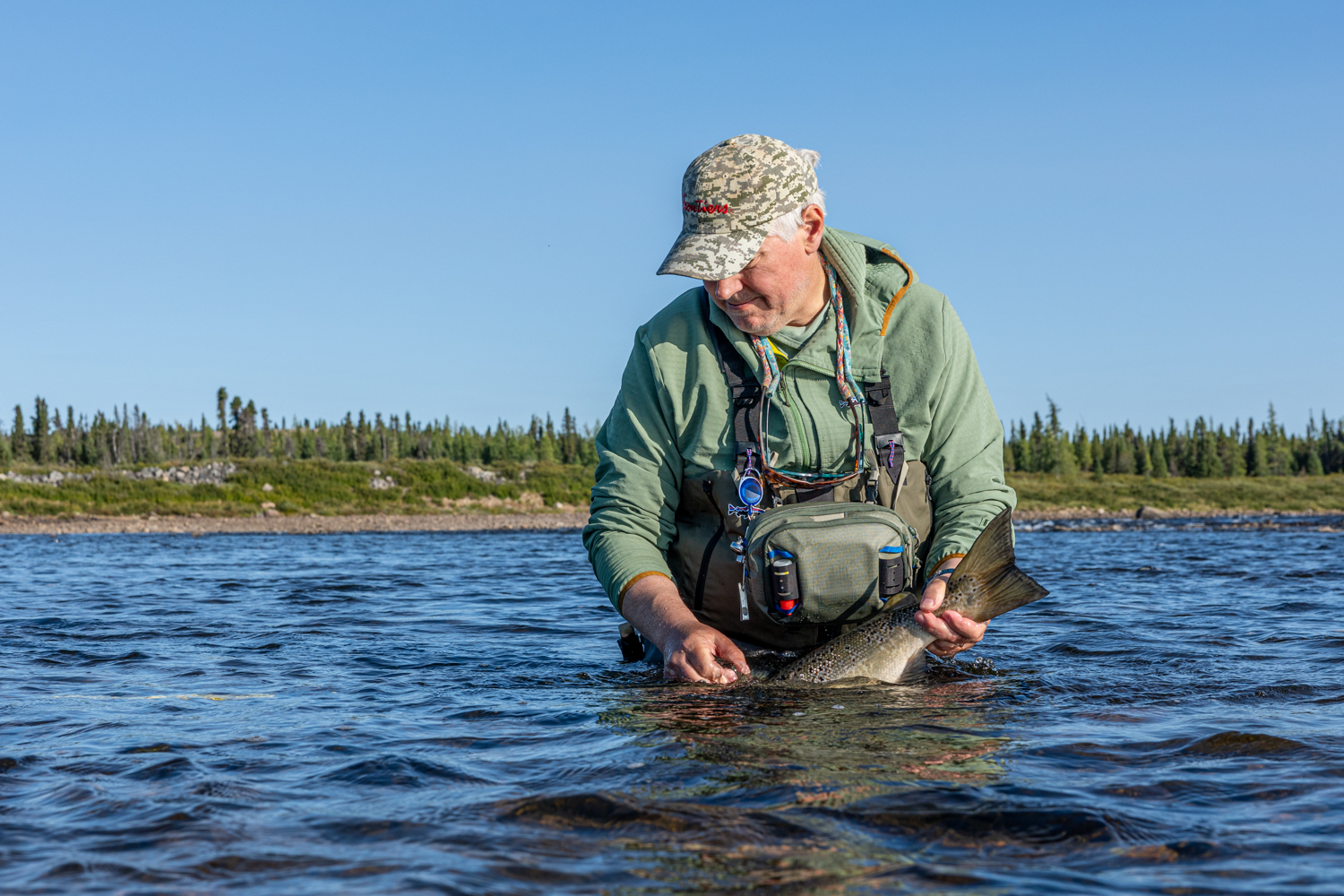
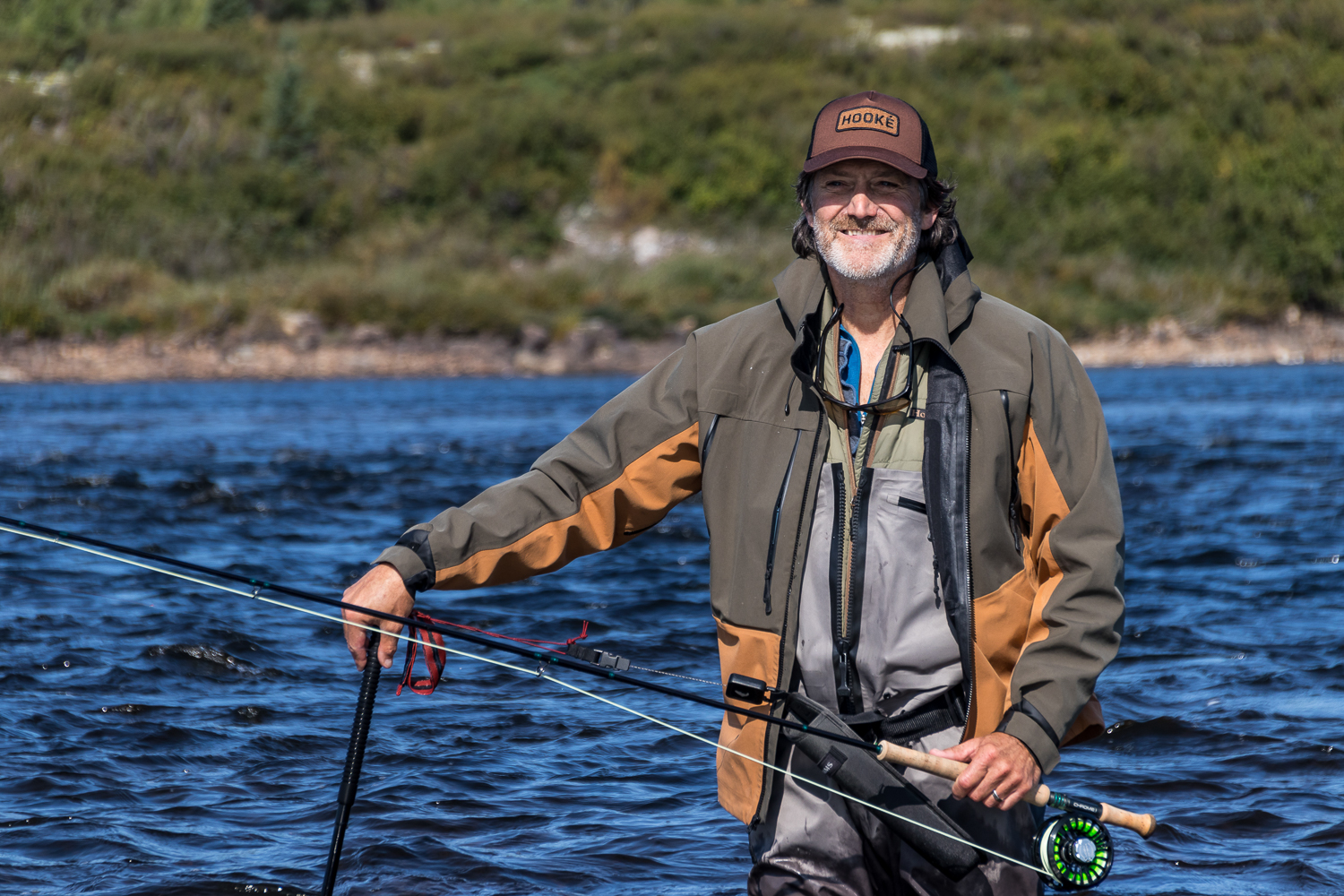
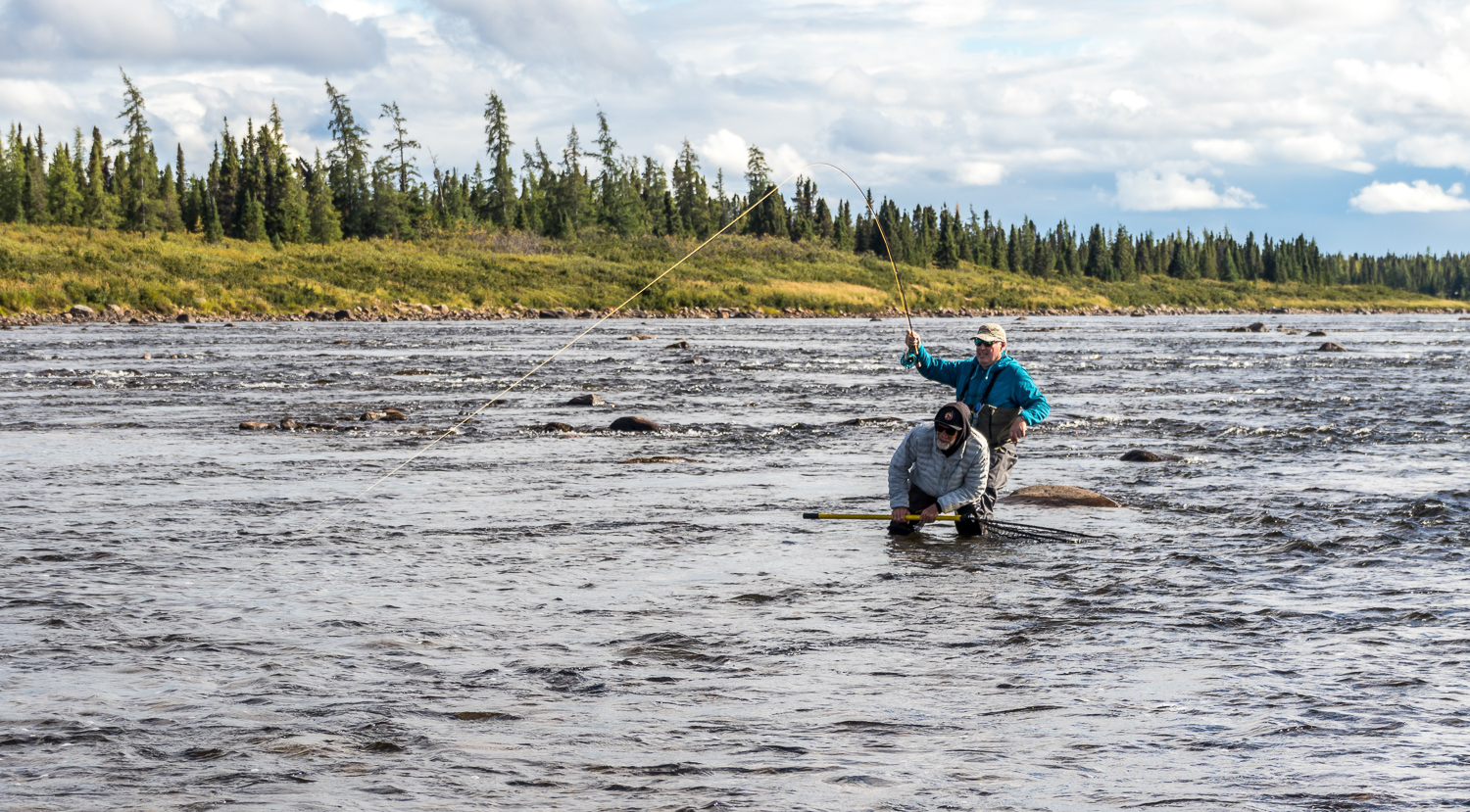
We were five fishers in camp. Myself, Paul, the owner, Rockin Ray (of radio DJ fame) and the lovely Uncle and Nephew (mature) team of Dennis and Max. Paul fished about half the time because he was buzzing about camp working on stuff. Max and Dennis are experienced fishers but not for Atlantic salmon and Rockin Ray is a highly experienced salmon fisher but focused on his home and/or Canadian rivers. I landed 34 fish for my weak.
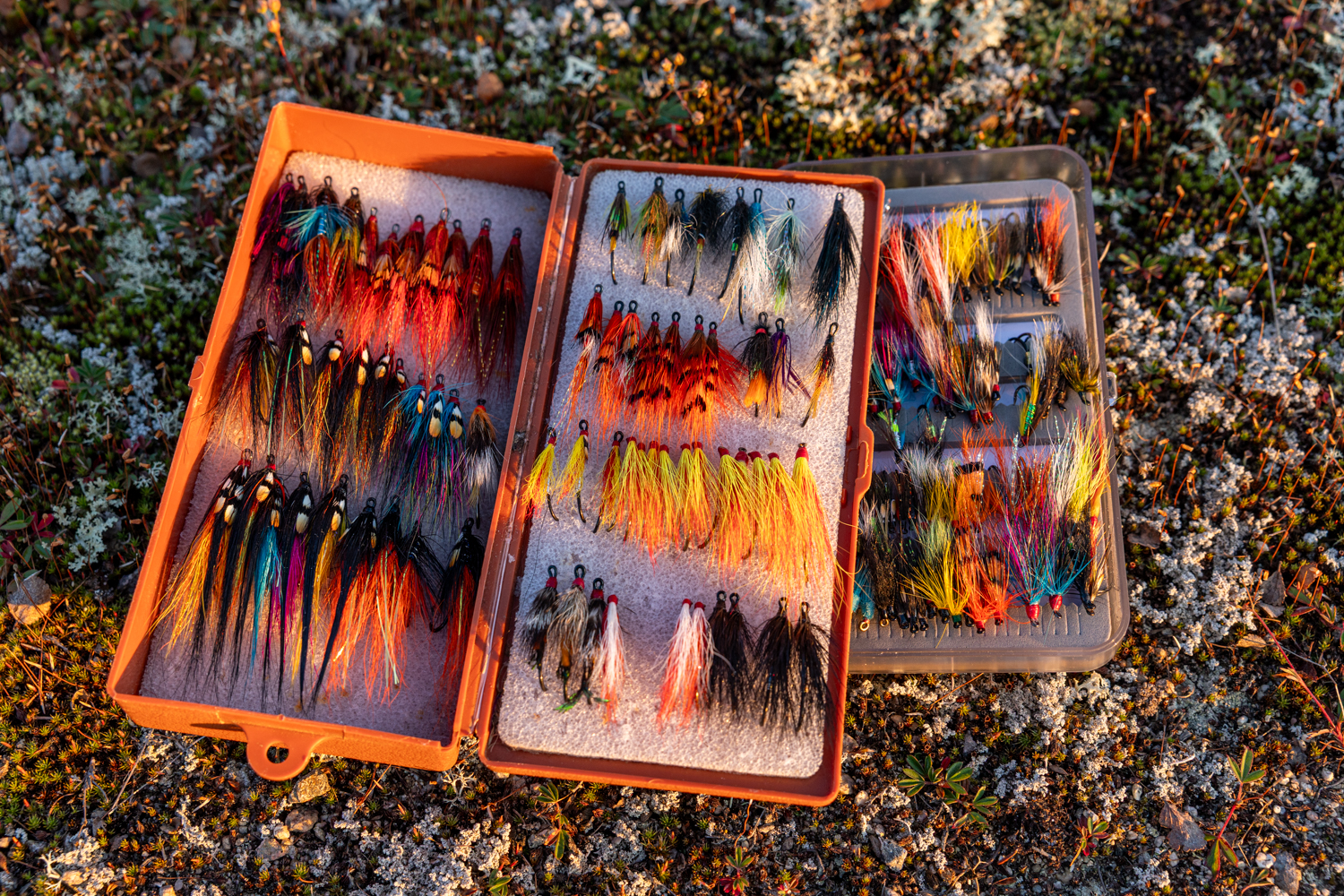
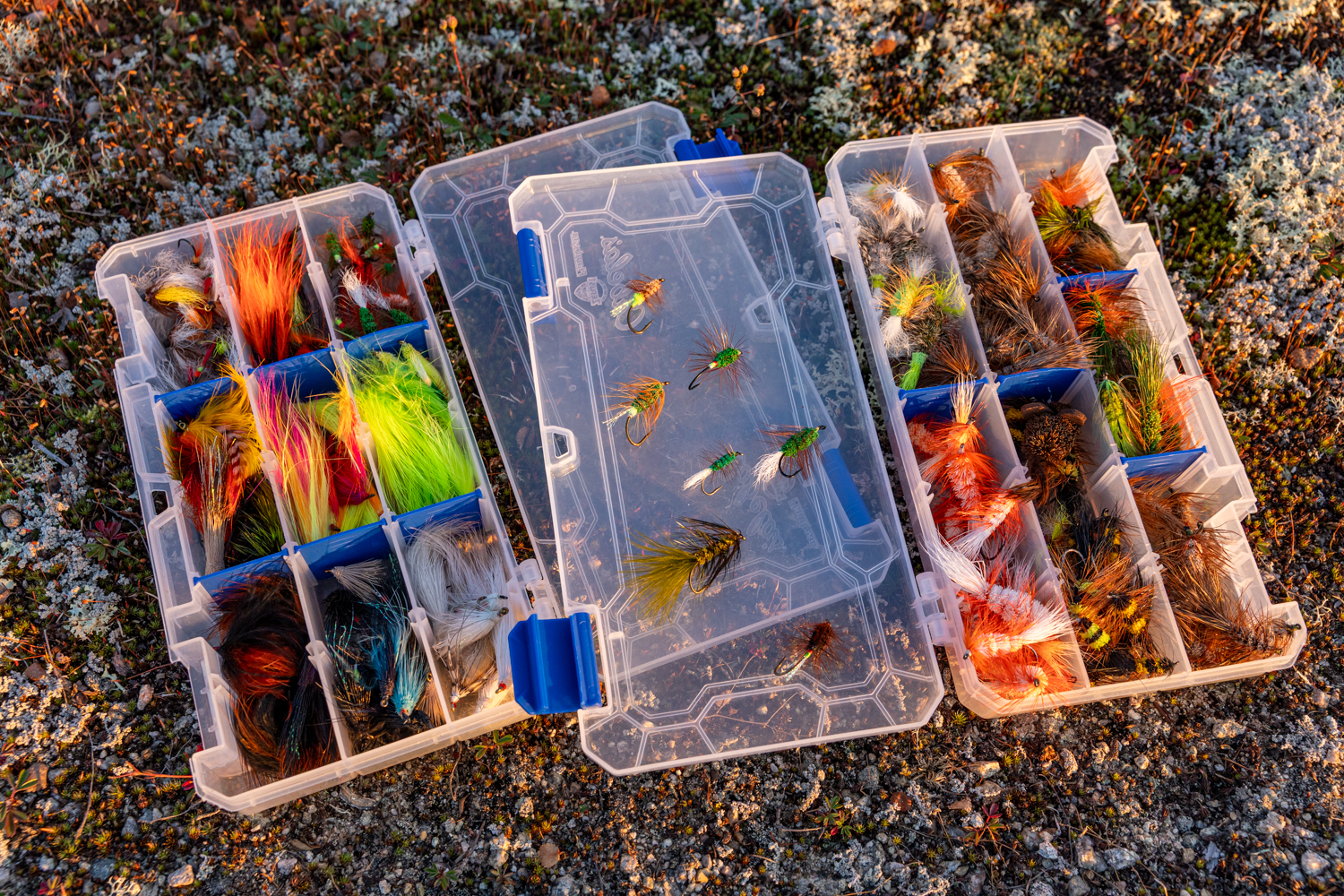
The others caught far fewer (we maybe landed 70+ for the week) because of busyness, lack of experience and in the case of Ray, we deduced (sadly on the last day) that he was fishing a much slower fly than me and that was probably the difference. I also had the luck that Clayton, my guide on the first day, gave me fly advice and chose a small brown hopper pattern which proved lethal when fished downstream and across. I was also brave enough, at Dave the guide’s encouragement, to try a bee bomber dead drift and that proved highly effective too to Dave’s chagrin because tying a two-tone bomber is so much more time consuming! To have perspective, 4.5 rods landed 70+ fish in extreme low water. Another river close by was fished by 8 rods, they landed 5 grilse between them. To know the river still delivers in such low water is a blessing.
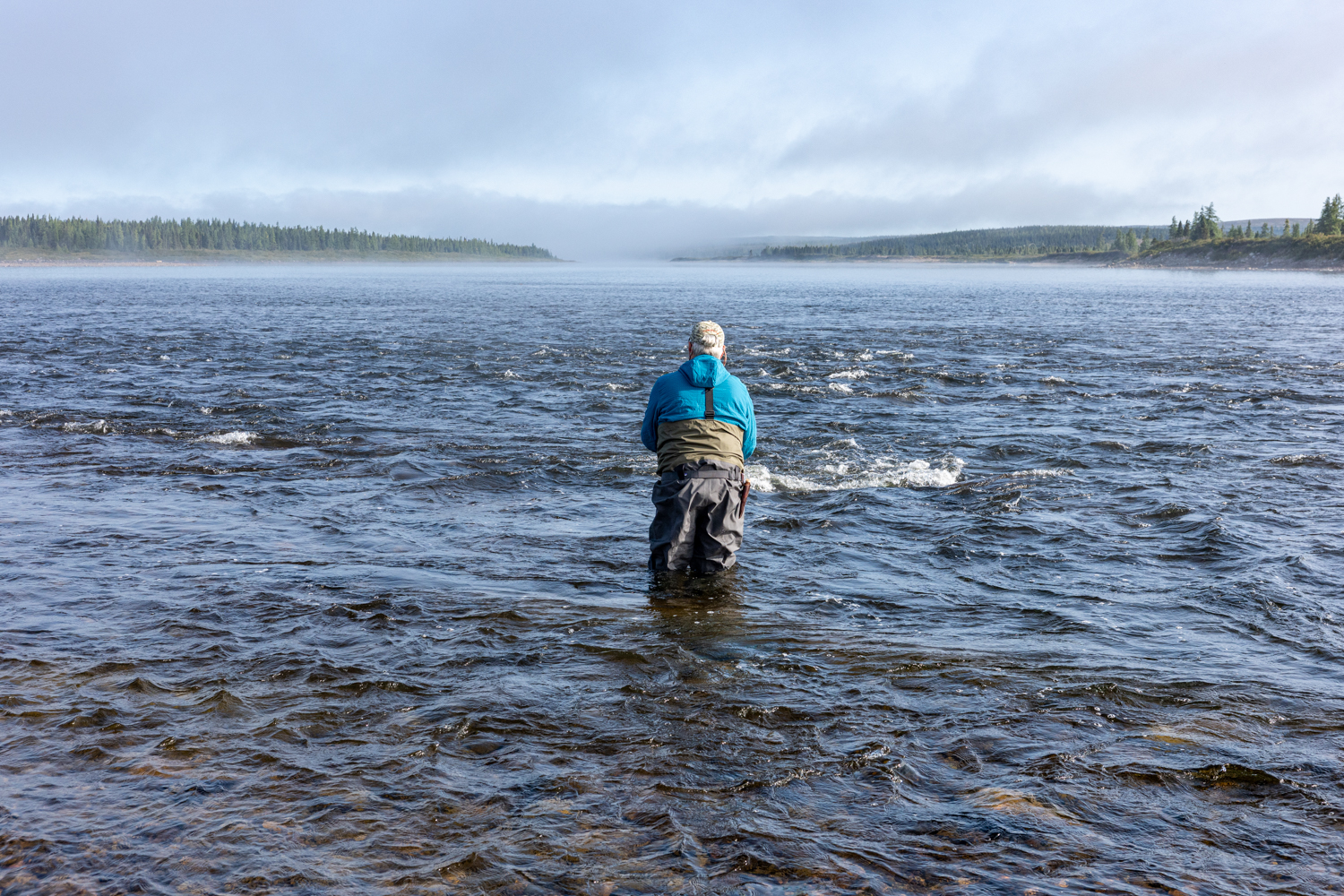
Due to the low water, we were mostly fishing to fish lying in 30 to 40 inches of water. There was a major rapid all the way across the river (which likely really is a major rapid in normal water) and we fished down to the fish from where the waves broke until we could wade no further. We would then turn around and fish our way back up the water we had fished with a dead drift bomber. I was amazed at how much activity we would get with a dead drift dry even after fishing down through with a swinging fly. There were times when we would raise a fish with the swinging fly and get it to take with a dead drift bomber. In terms of fishing the dead drift fly and how that differs to fishing the Flowers river (see blog here) on the Flowers one can see the fish and cast to them which is fun but at times one felt one was beating on them whereas here, one was always searching for fish.
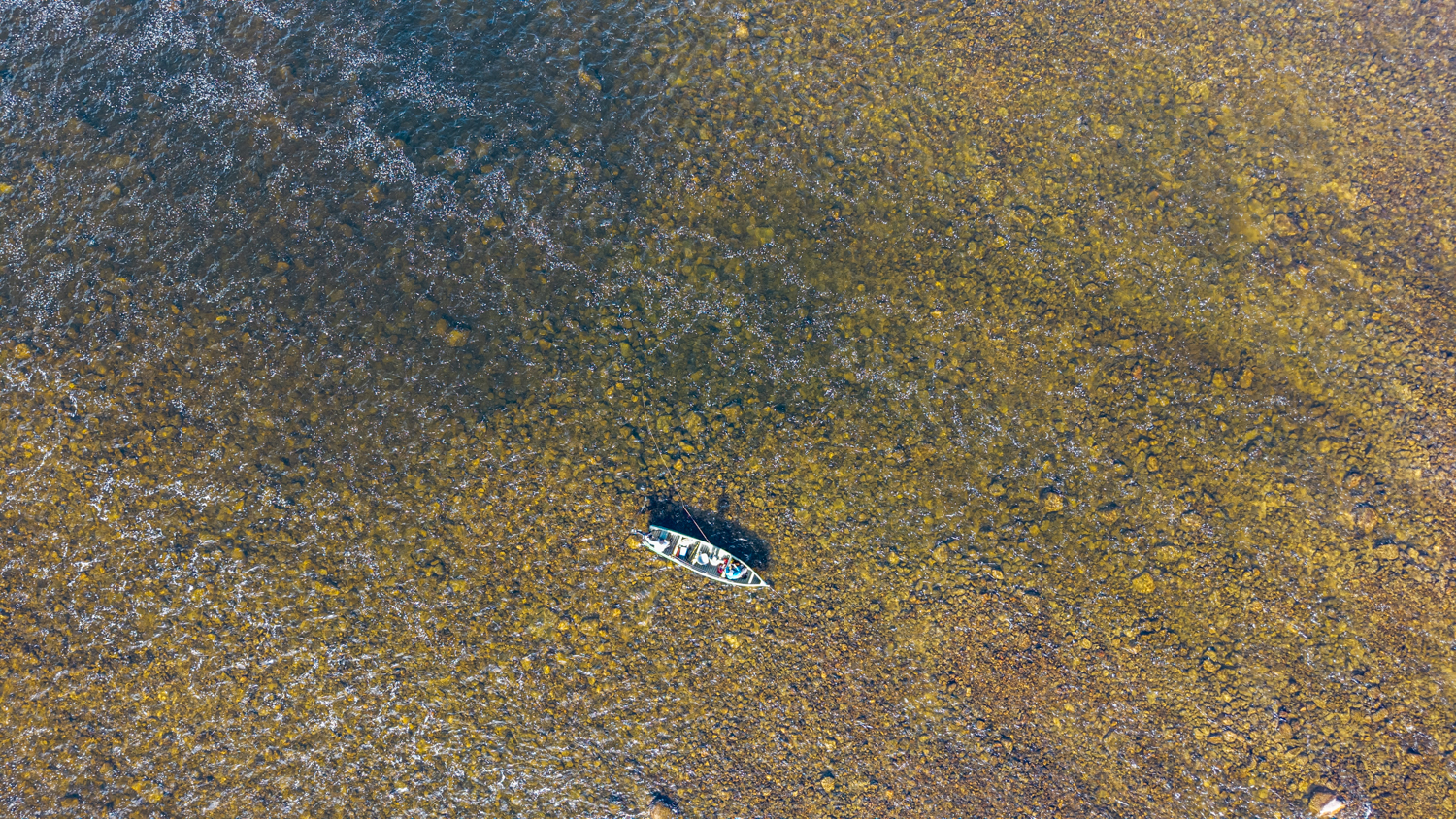
Overall, the fish would take the swung fly aggressively and it was usually clear when one had had a rise. The way they took the dry varied from coming flying out of the water as they nailed it, to the slowest of slow sups so much so I found myself almost rubbing my eyes to work out if it was a pair of jaws I saw slurp my dry fly. There was everything in between.
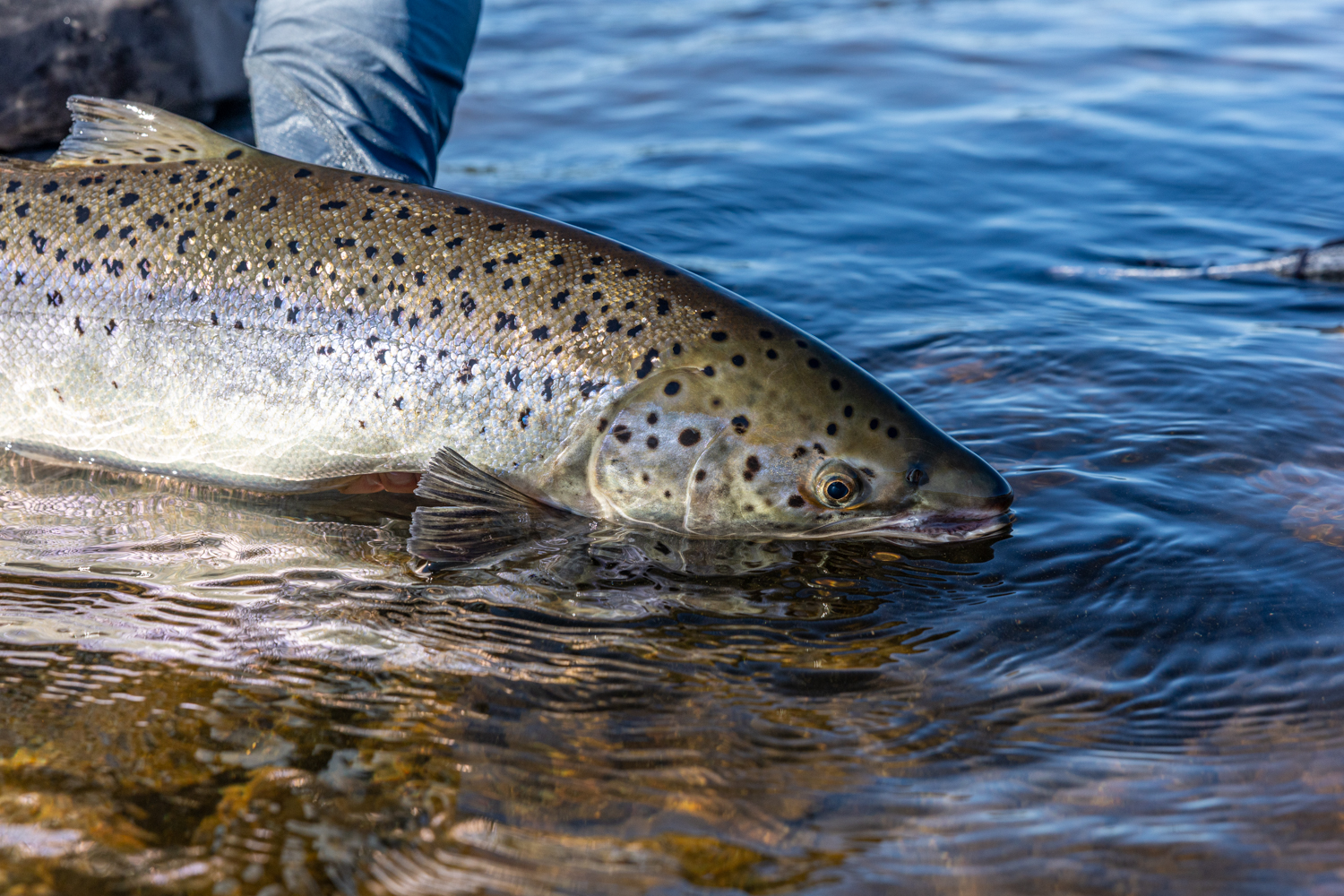
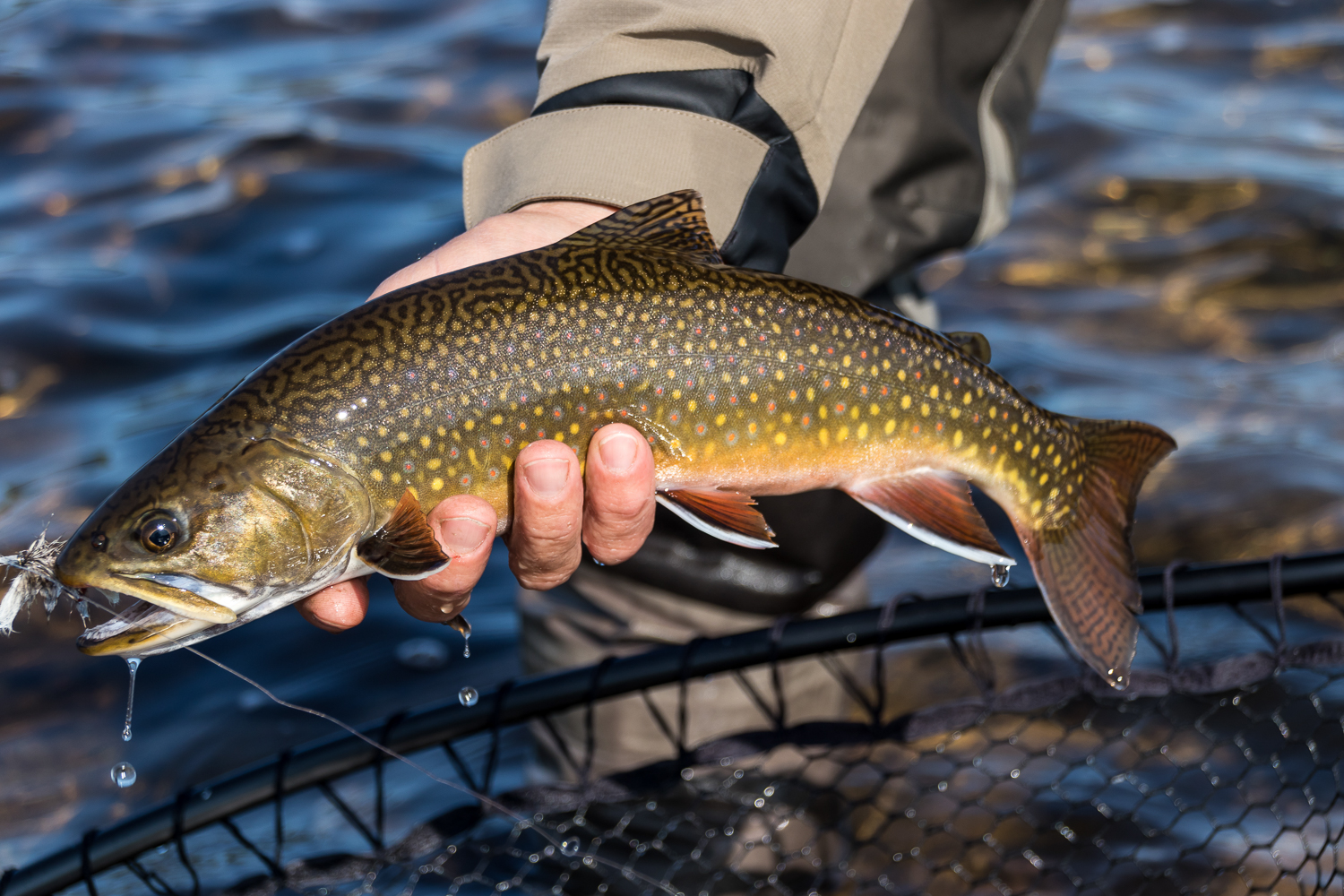
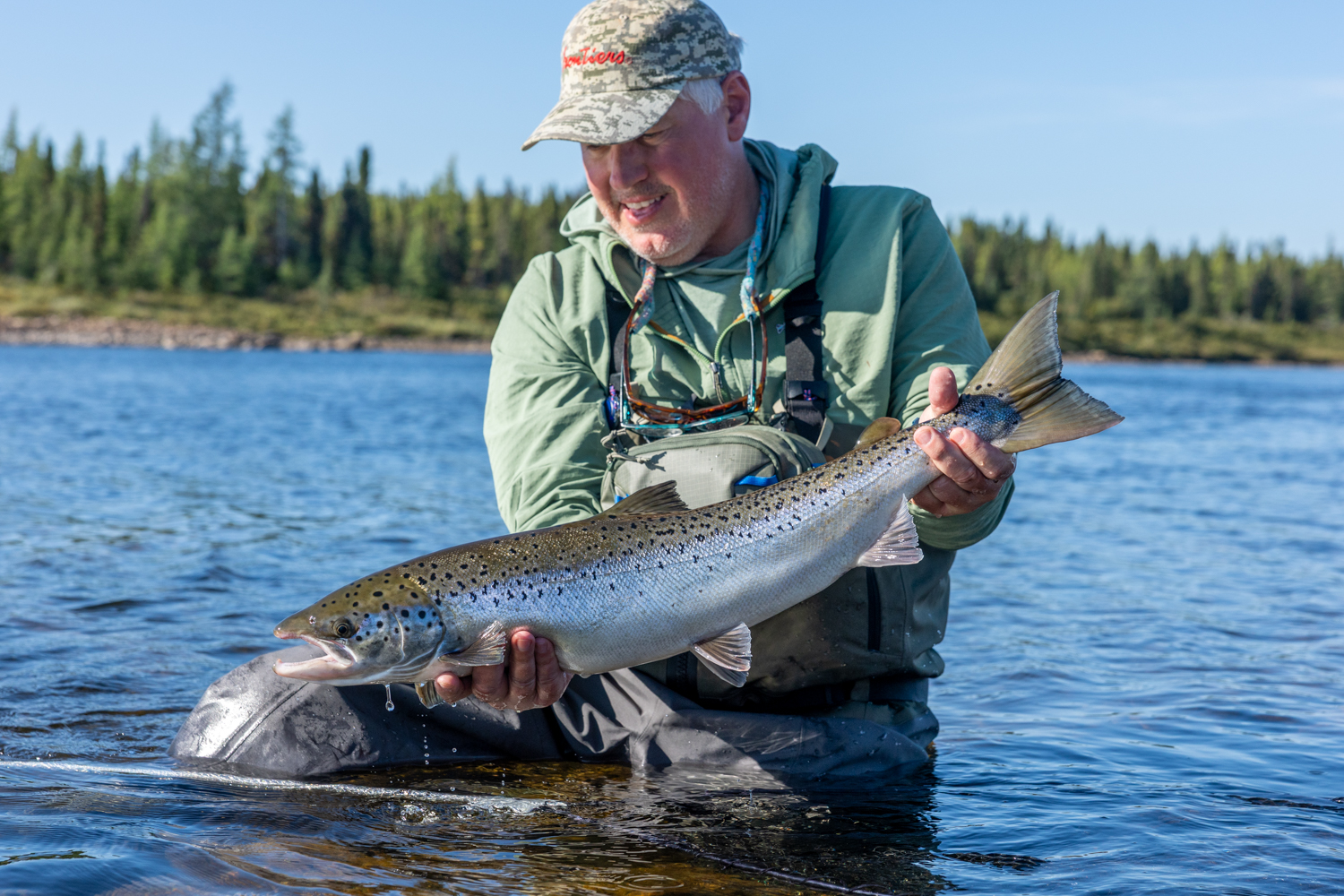
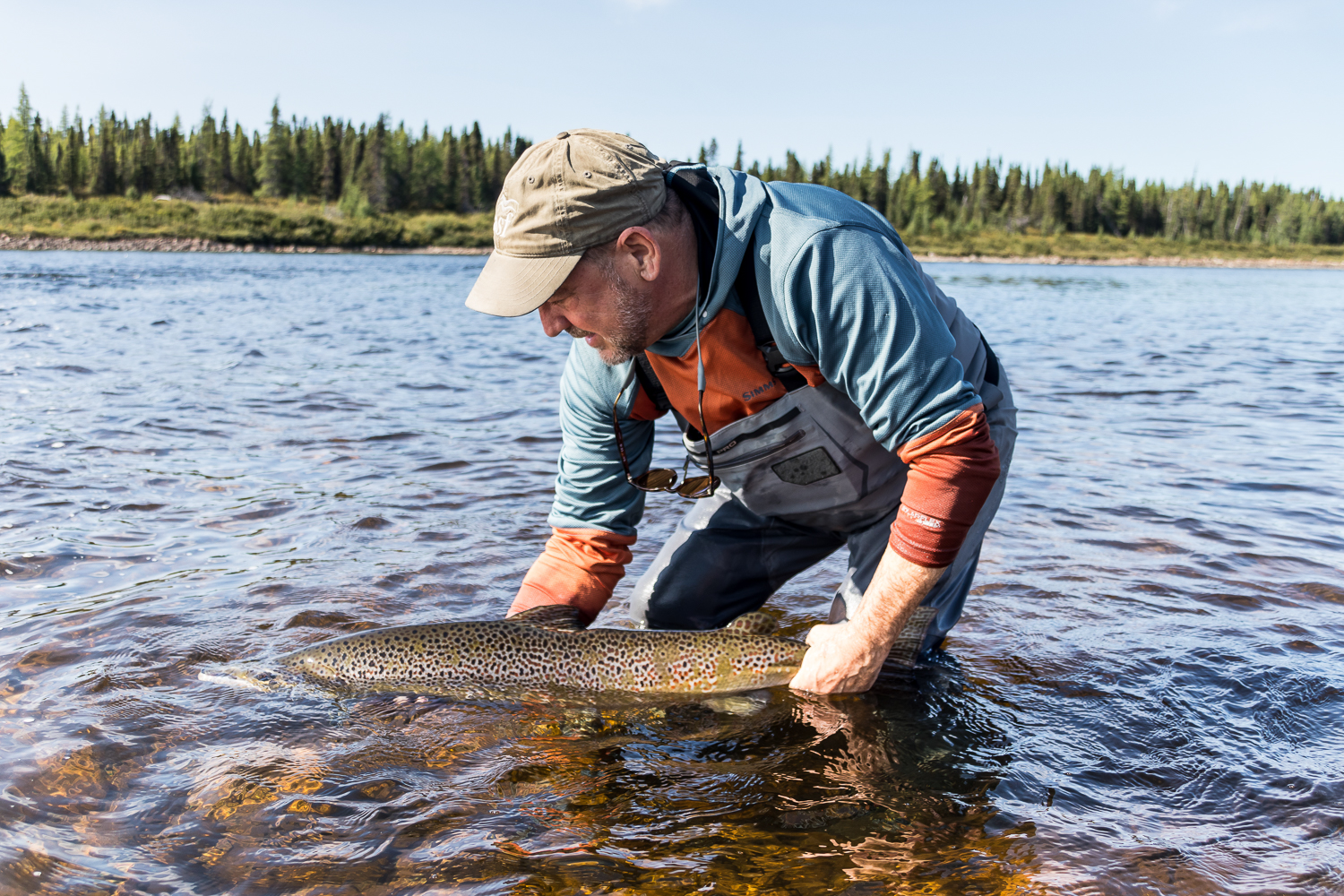
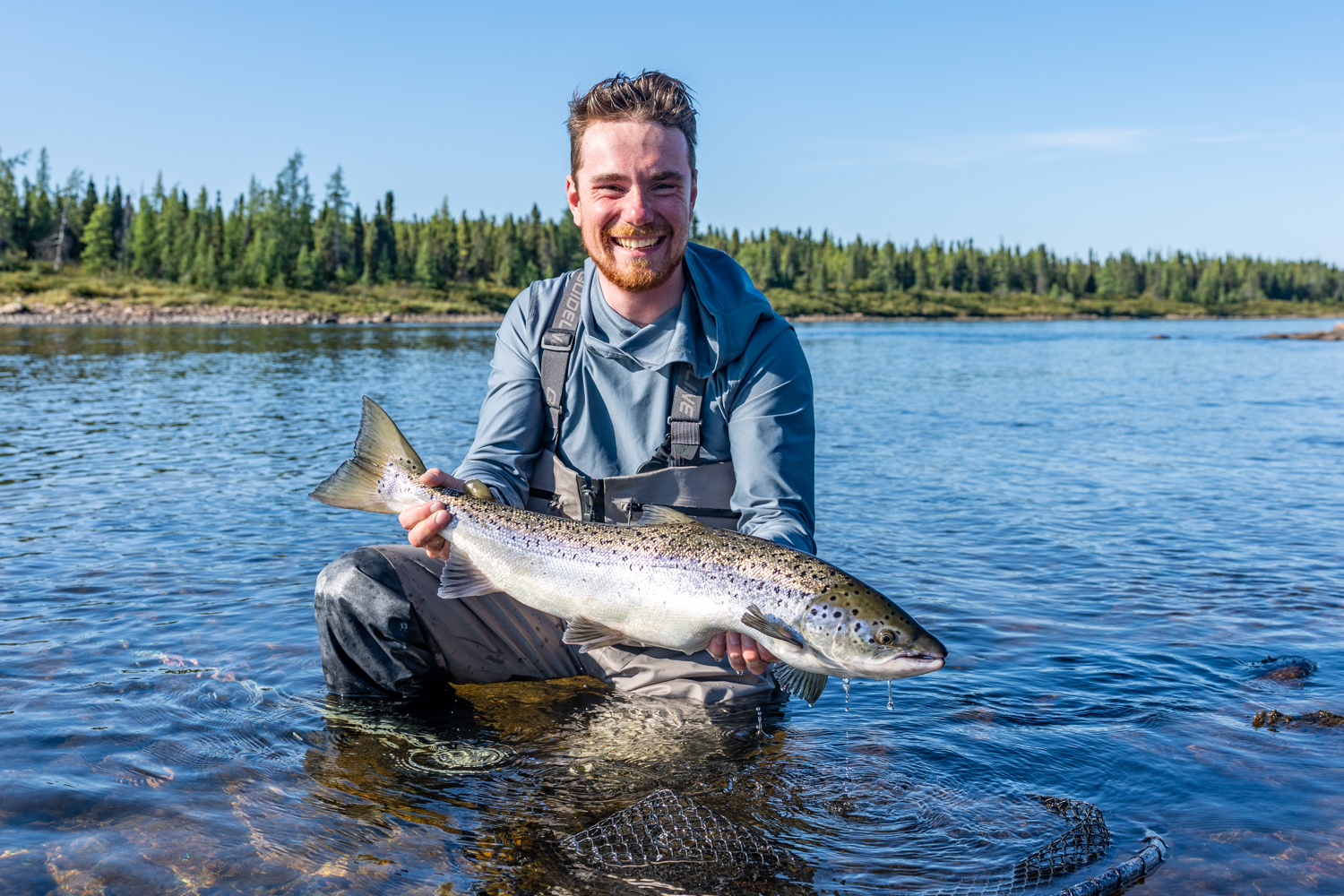
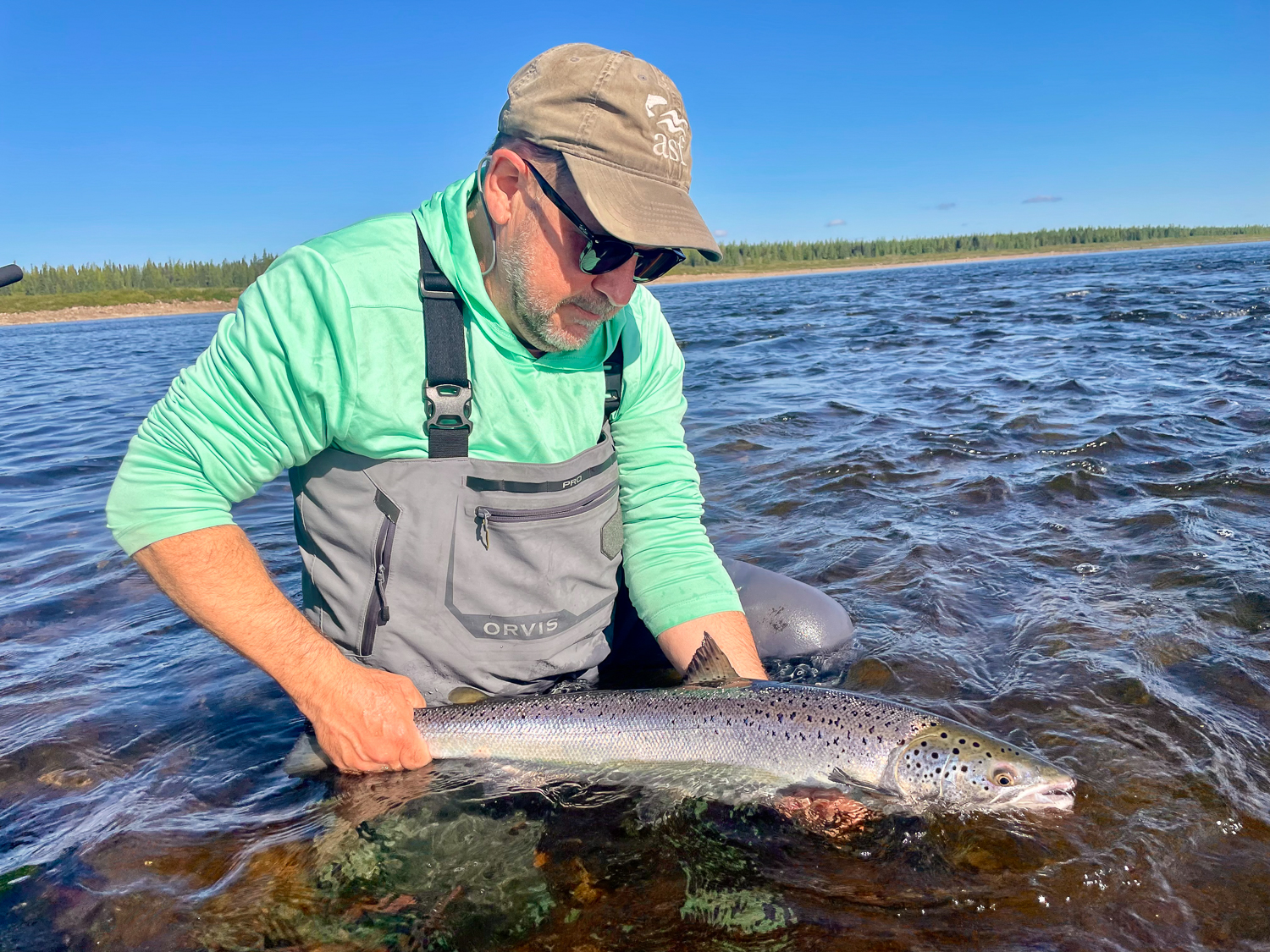
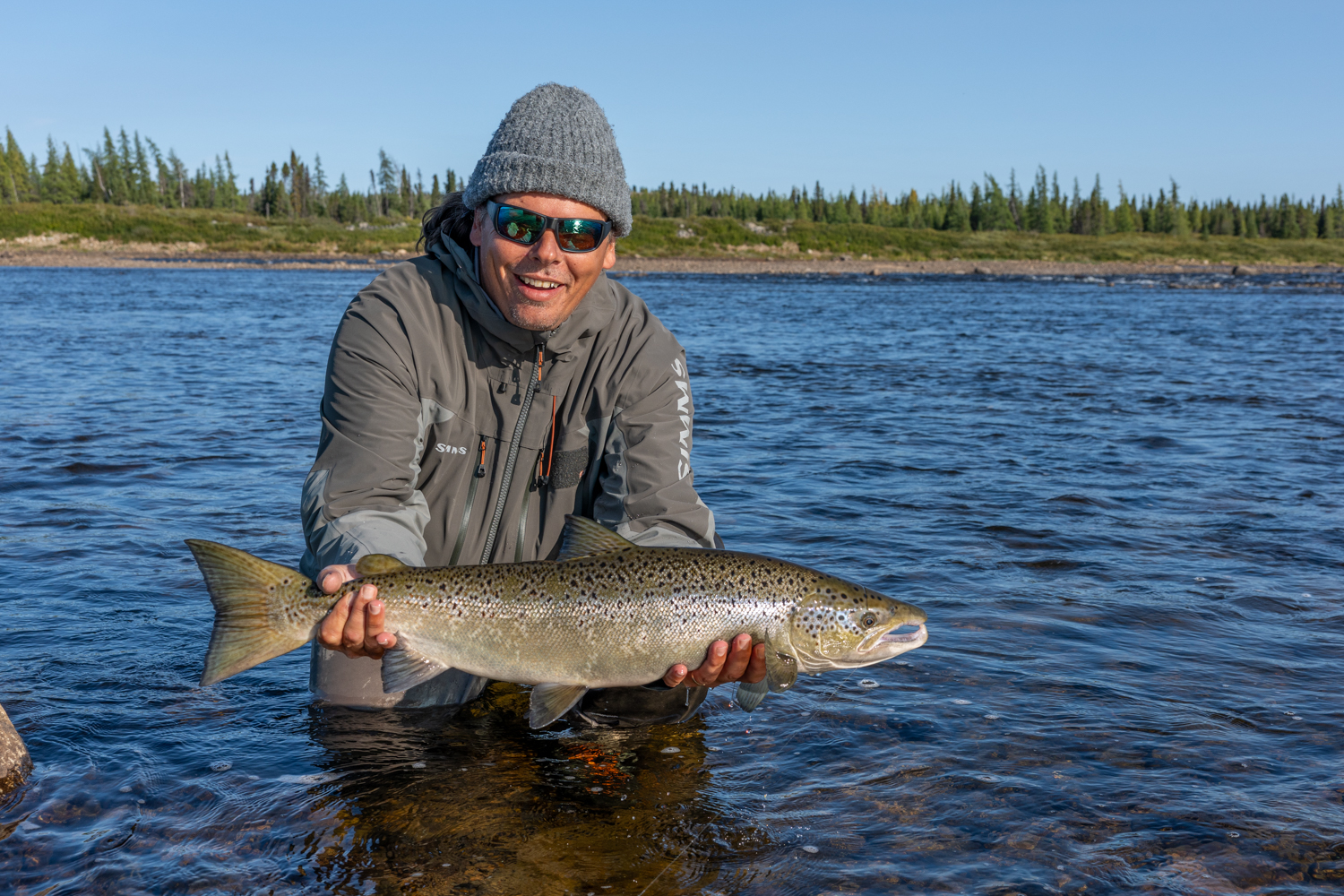
What of the fish themselves? To quote John Doelman from the 1980’s ‘They ranged in size from 5 to 20 pounds, and were taken on both wet and dry flies, it didn’t seem to make any difference. The Delay produced!’ This seemed to be the case. I probably lost a 15lbs fish, but my size range was probably from 3lbs grilse to 12lbs fish. There are 15lbs and even 20lbs fish about but no bigger. The ideal rod under normal conditions (they do not get a lot of big winds during a season it seems) in my view is a 6 or 7 weight rod combined with a Single-Handed Spey line by Rio and 10lbs leader. You will note from the photos that the fish look different. They are heavily spotted and varied from impressively fresh given how far we were from the sea to heading for coloured. We did not catch any proper dark fish but some of the hens, including fresh ones seemed laden with eggs. Some fish did not feel firm in their bodies and the photos confirm this – fish in Iceland of similar size do not hang but rest firm across two hands. There is conjecture about when these fish run and if there are multiple runs – the Inuit were catching fish of a really good size and fresh in the estuary during our week – where are they destined for? There is also conjecture that some are land-locked salmon or Ouananiche (pronounced wonanish) – genetically the same but they go to lakes to feed instead of the sea. These deliberations need to be resolved by the scientific fraternity and that is now in process, but it is a measure of how overlooked the Delay is as a salmon river that the scientists are only now really applying themselves to the river at Paul’s stimulation.
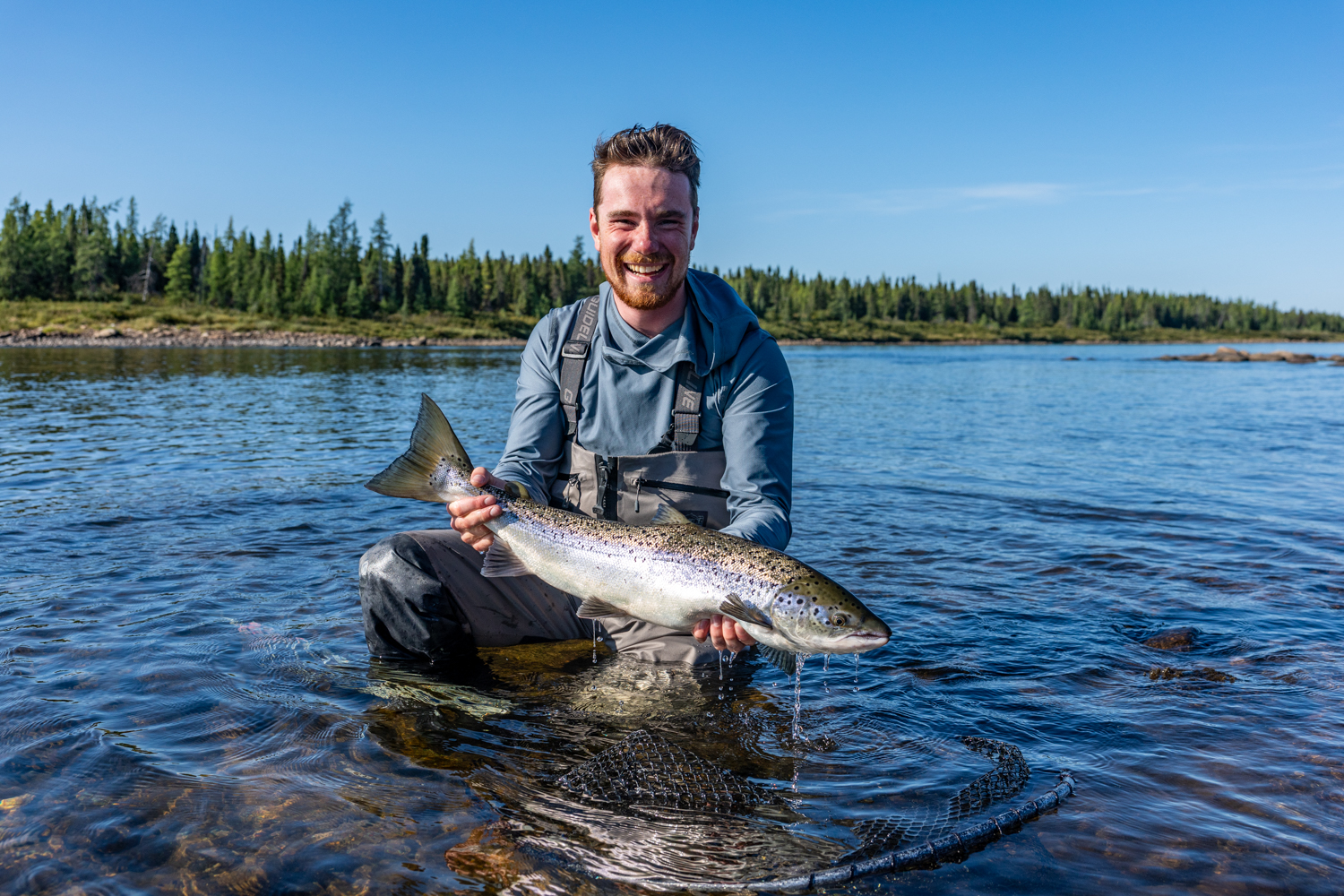
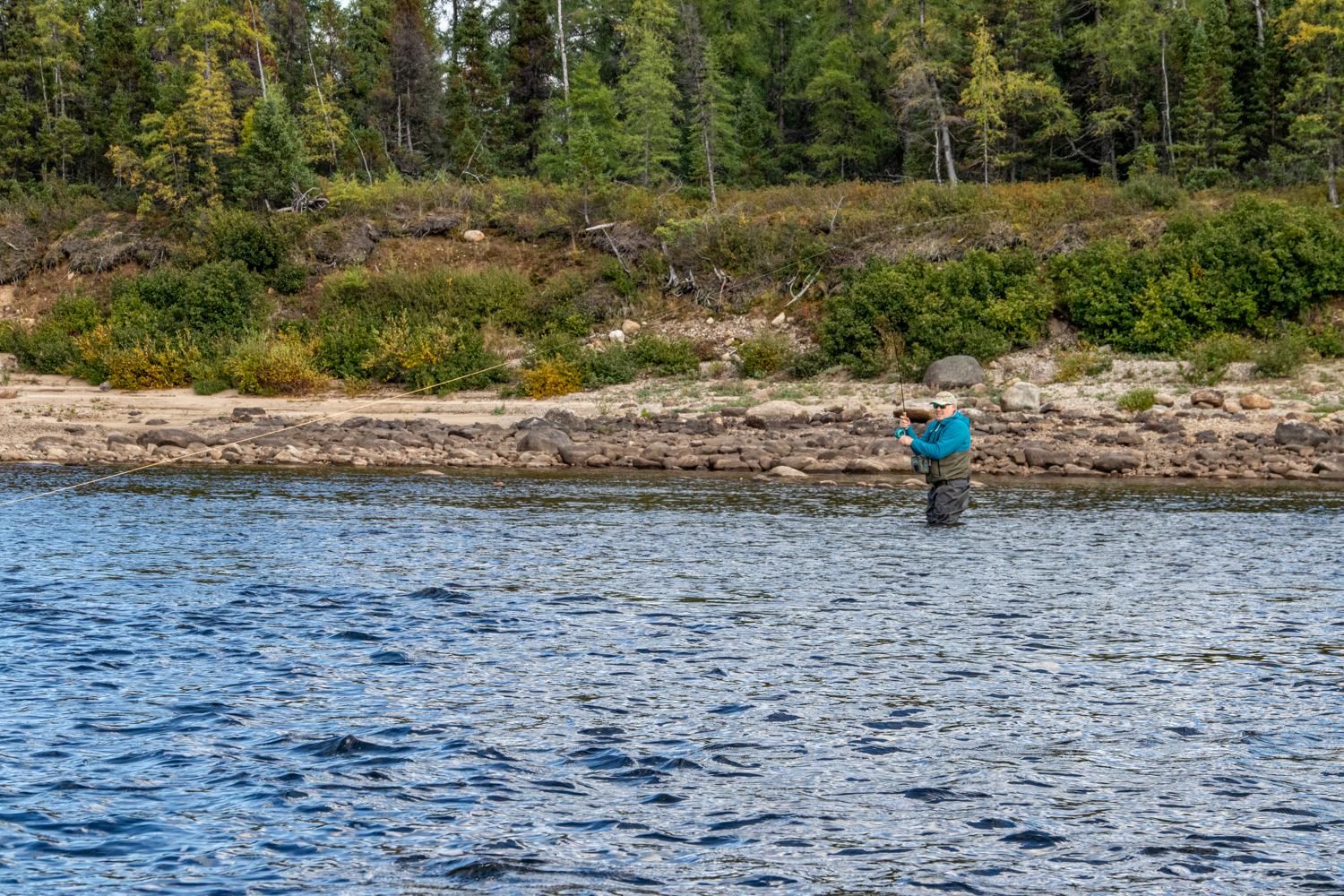
No matter what run or if these fish, or some of these fish are Ouananiche, they took well and fought hard, some with multiple long runs into the backing. They are unique looking as I have said but they all had big tails on them. Could you horse them with a 14 ft double-hander, probably, but you may bend hooks and rip lips etc and, in the conditions we were, you would spook fish landing a bog heavy fly line on the water. Their fighting prowess was all them, there was no major current to help them. Wet flies were generally 12 and 14’s with some fish raised to even size 16. Bombers were best at medium sized probably size 8 but bigger and much smaller caught fish as well with perhaps the most aggressive take of all being to a very small caddis having raised the fish on a normal bomber.
Did I enjoy the fishing? I am more a fisher to get the take than the fight and I was more than satisfied but yes, I enjoyed all aspects of the fishing, and I even used a 4-weight on the last day which was fun! Given how confined we were to a few spots, one would expect them to wither with pressure, and they did a little, but I was really impressed that the fish just kept on coming, some days the general trend was smaller fish and more grilse, other days it was all salmon. I think the withering was more caused by the ever-dropping water levels.
I should not forget to mention the stunning, wild (of course) resident brook trout up to maybe 4 or 5 lbs which frequent the main river and the tributaries depending on the time of year.
Reflections
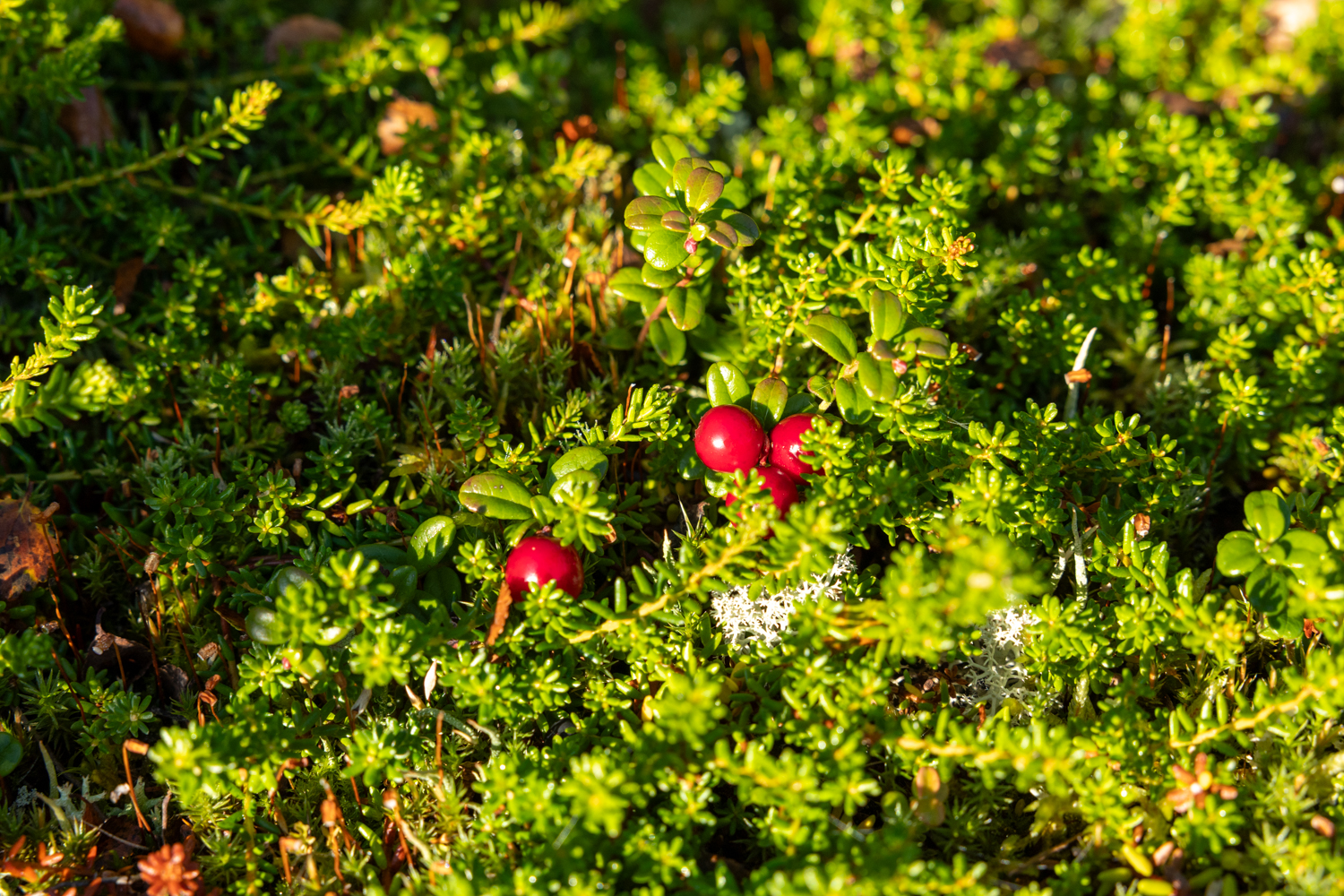
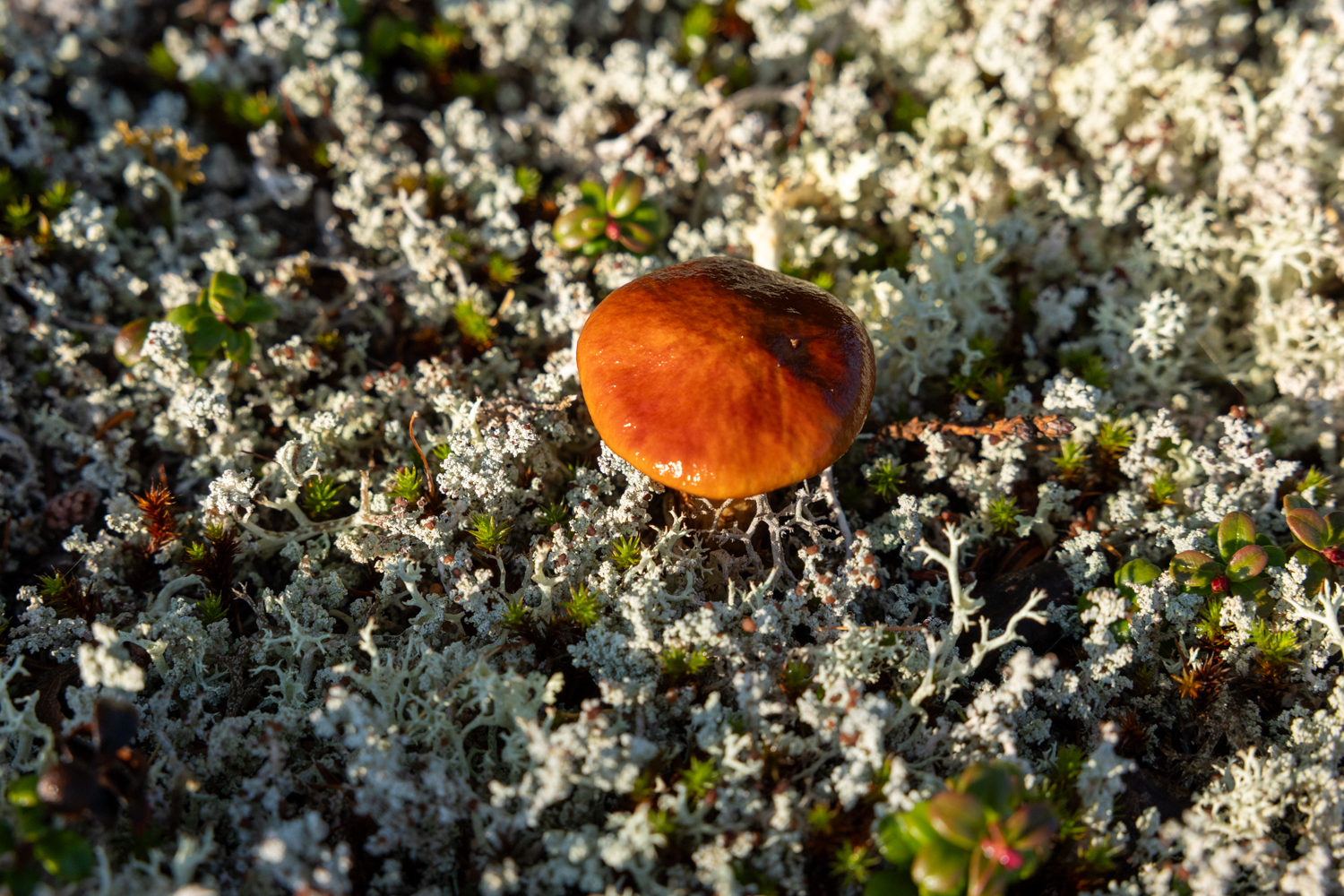
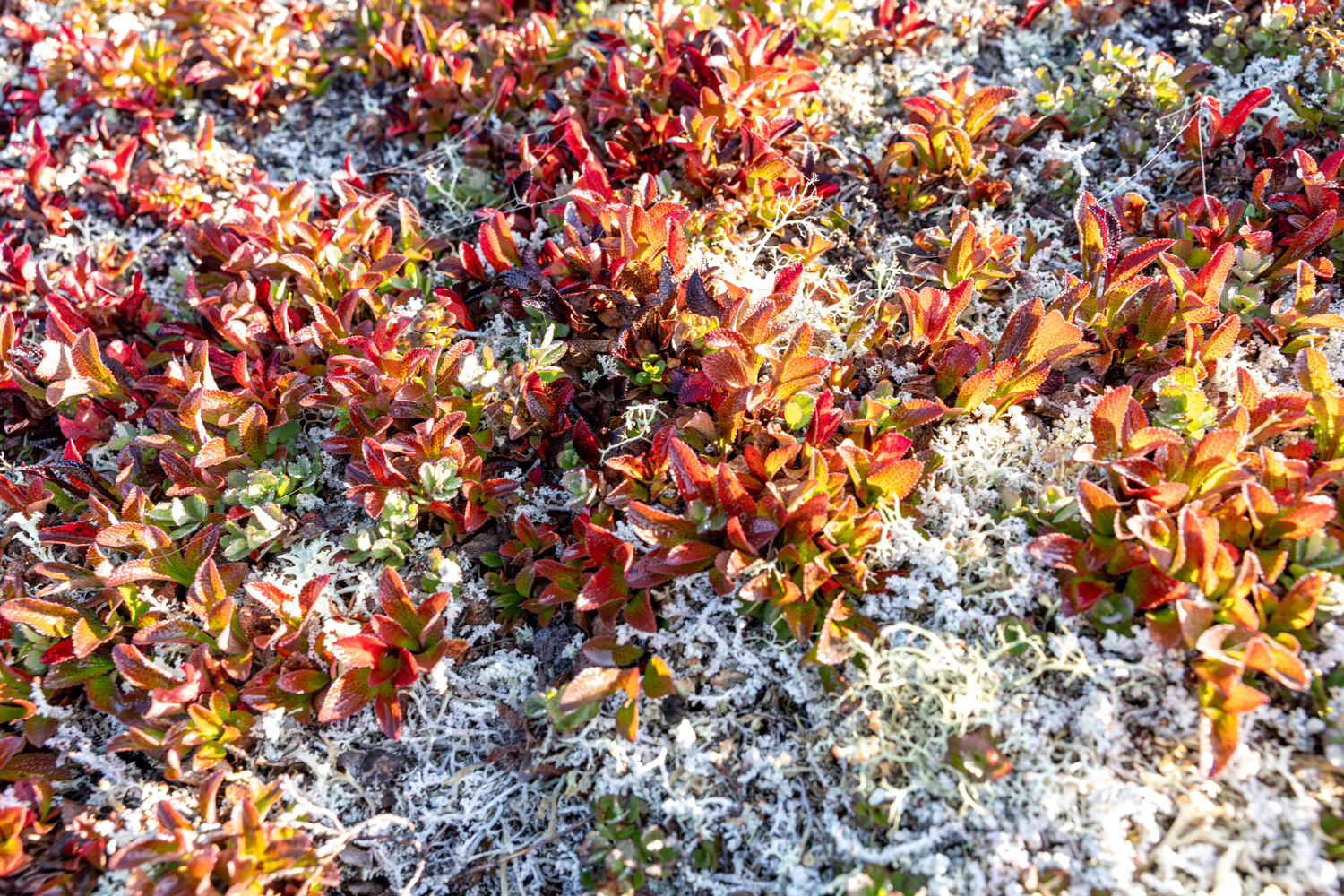
It is a relief to arrive at the best bit of this blog. I think I have got all the details down and not missed anything I think you need to know. Then again, I have not addressed the bugs. Though on my week, they virtually did not feature due to later in the season, frosts and fishing in the middle of the river, you need to know that there are black fly mainly and they bite and there are some mosquitoes. The screened areas in the cabins are highly effective so the chances of bugs in your room are minimal unless people are silly leaving doors and windows open. In the evenings around camp, they could be numerous but that is what the screened areas are for and they work well. They can/will be on the river if there is zero wind and you are fishing near trees and bushes. Make no mistake, there are bugs in varying numbers and there is no getting around it and one should be prepared. The camp has all the gear in terms of coils, screens etc but bring all your chosen protections and contraptions. We have chosen the dates we have for 2027 partly for the reduced bugs.
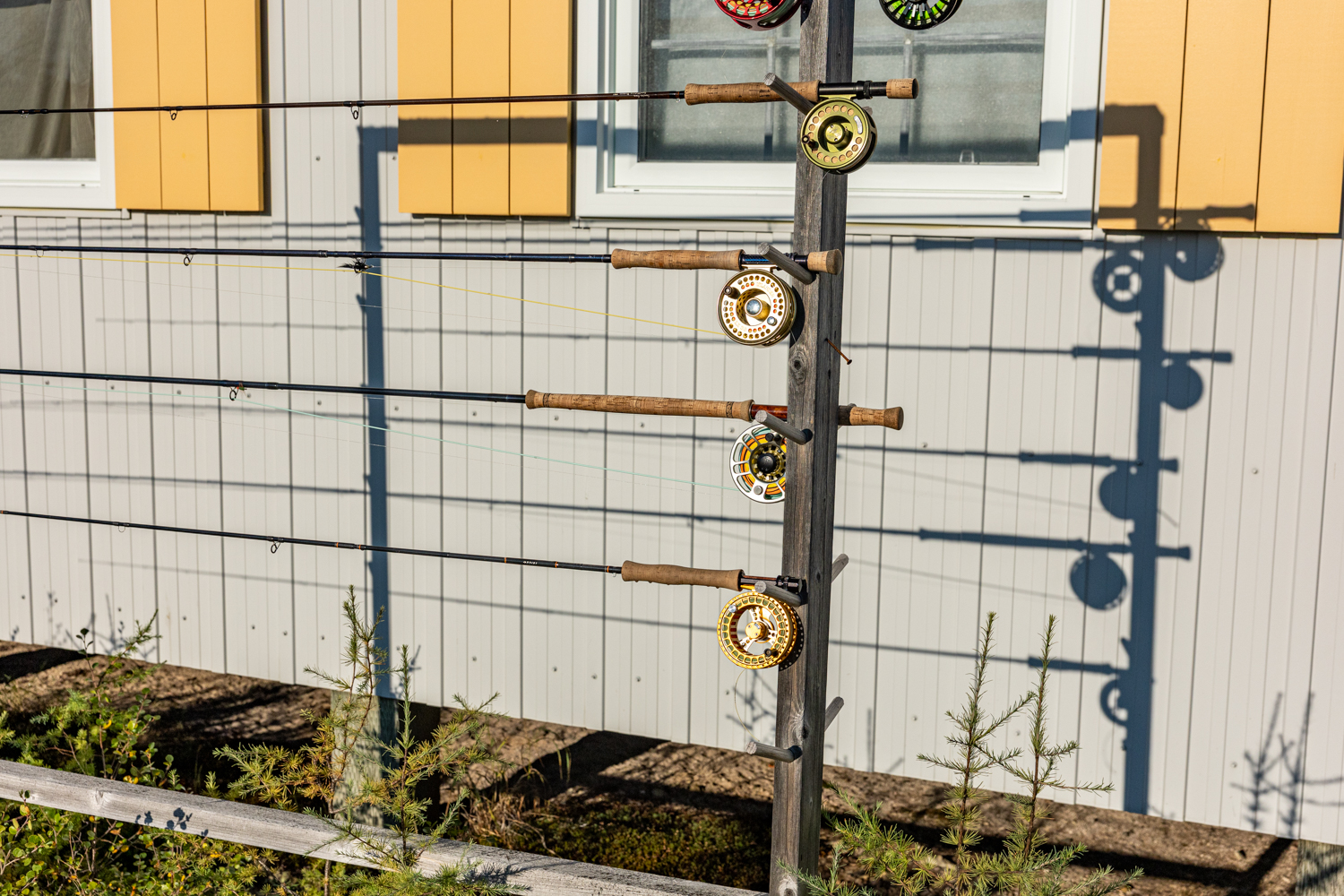
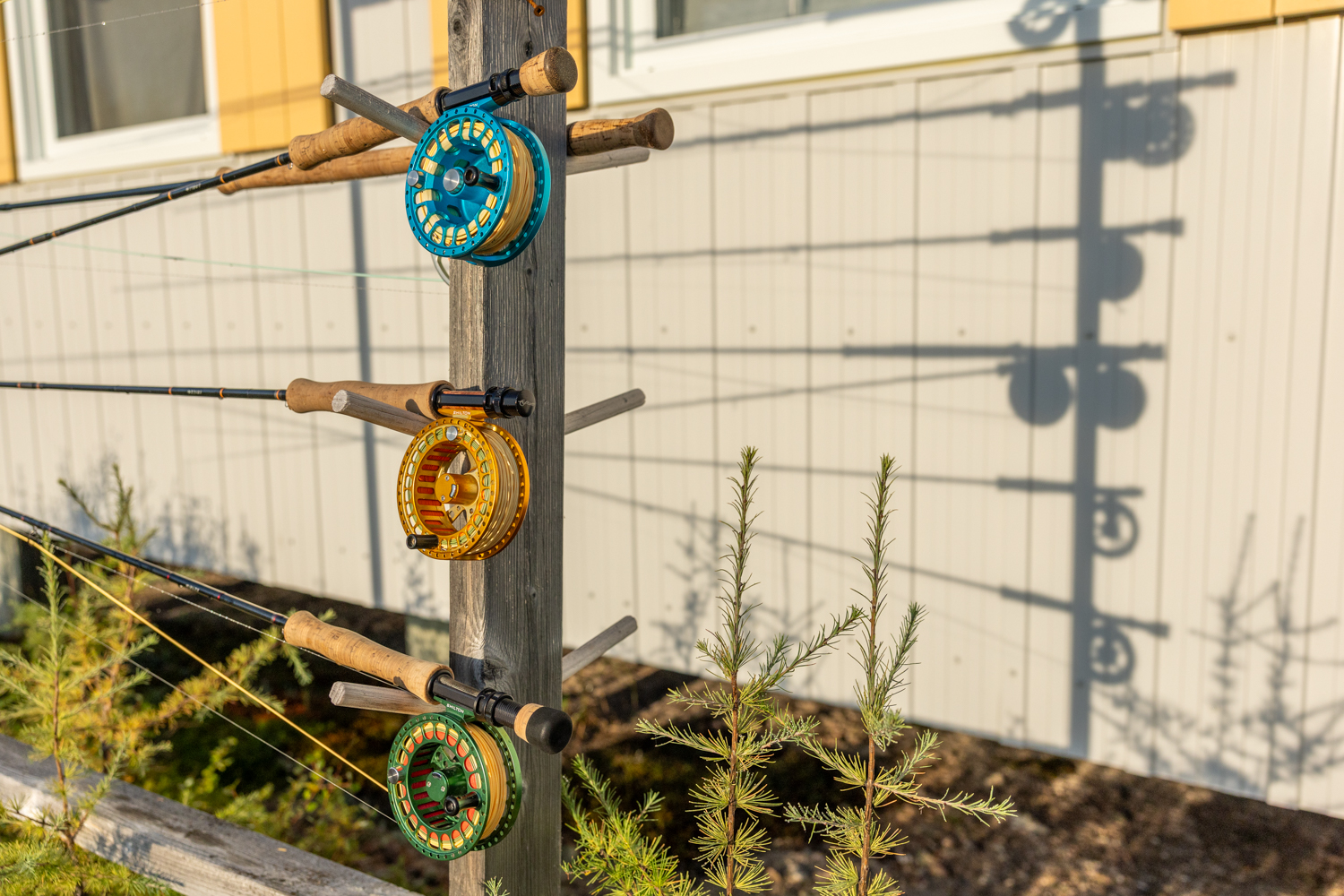
From a fishing point of view there truly were some stand out moments. Raising a fish to the swung fly, changing to a bee bomber and watching a beautifully back-lit, good fish roll on the fly in silhouette will stay with me for a long time. Similarly, having to double-take that I saw what I saw and then coming to my senses as I realised it was a salmon that had taken my fly… e v e r… sooooo… s l o w l y was pure magic. Finally, spotting two fish lying beside the boat while anchored fishing a point, seeing them lift to take the bee bomber and go back down multiple times before something spooked them and then being allowed to fish to the fish on the lip we had also seen roll very slowly was fabulous but to make the cast, drift the dry and see it nailed on the first drift will be a fish I will remember for a very long time. They said that the best souvenirs salmon fishing are the ones you lose, not this time, the magical takes on dries will long be souvenirs in my mind.
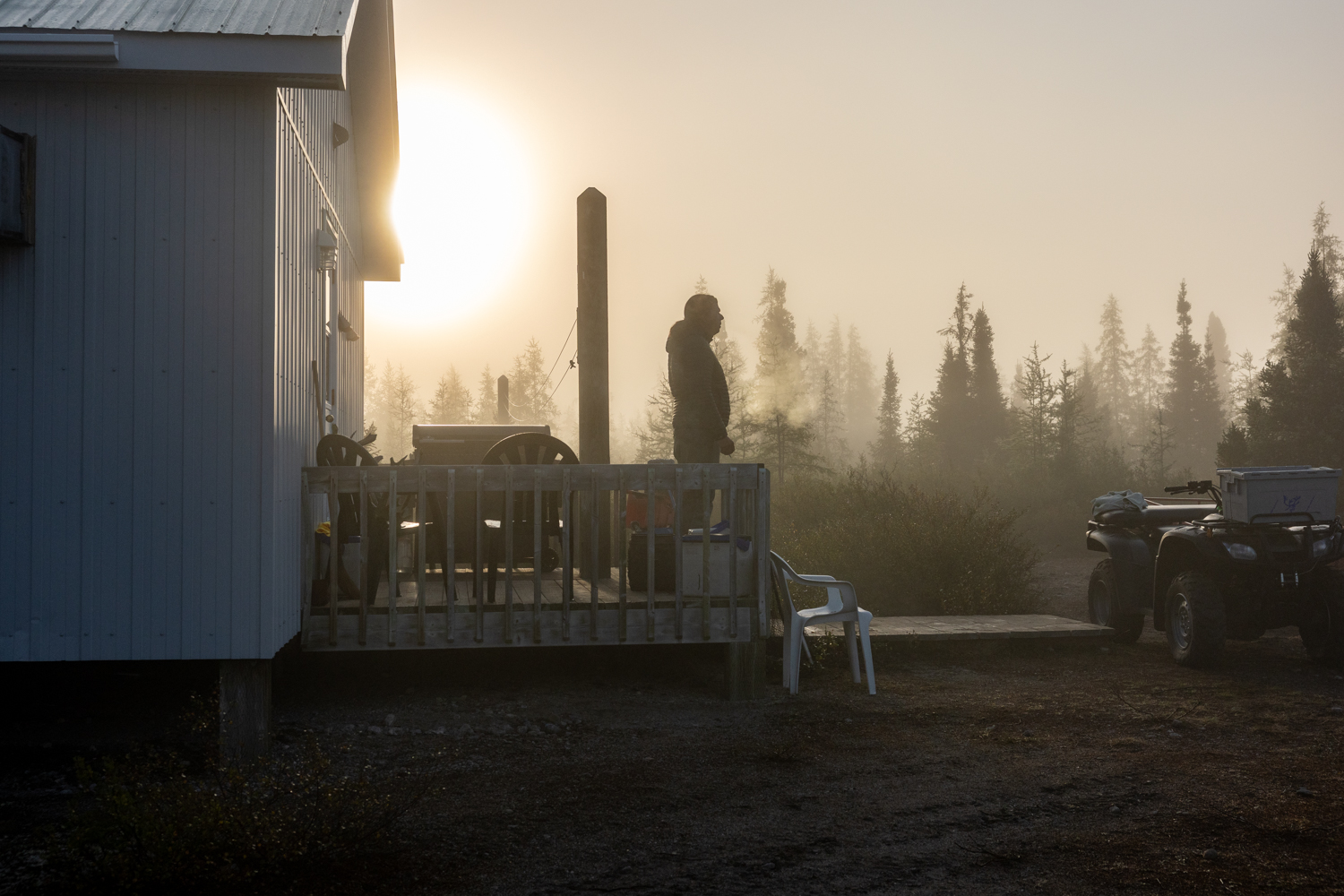
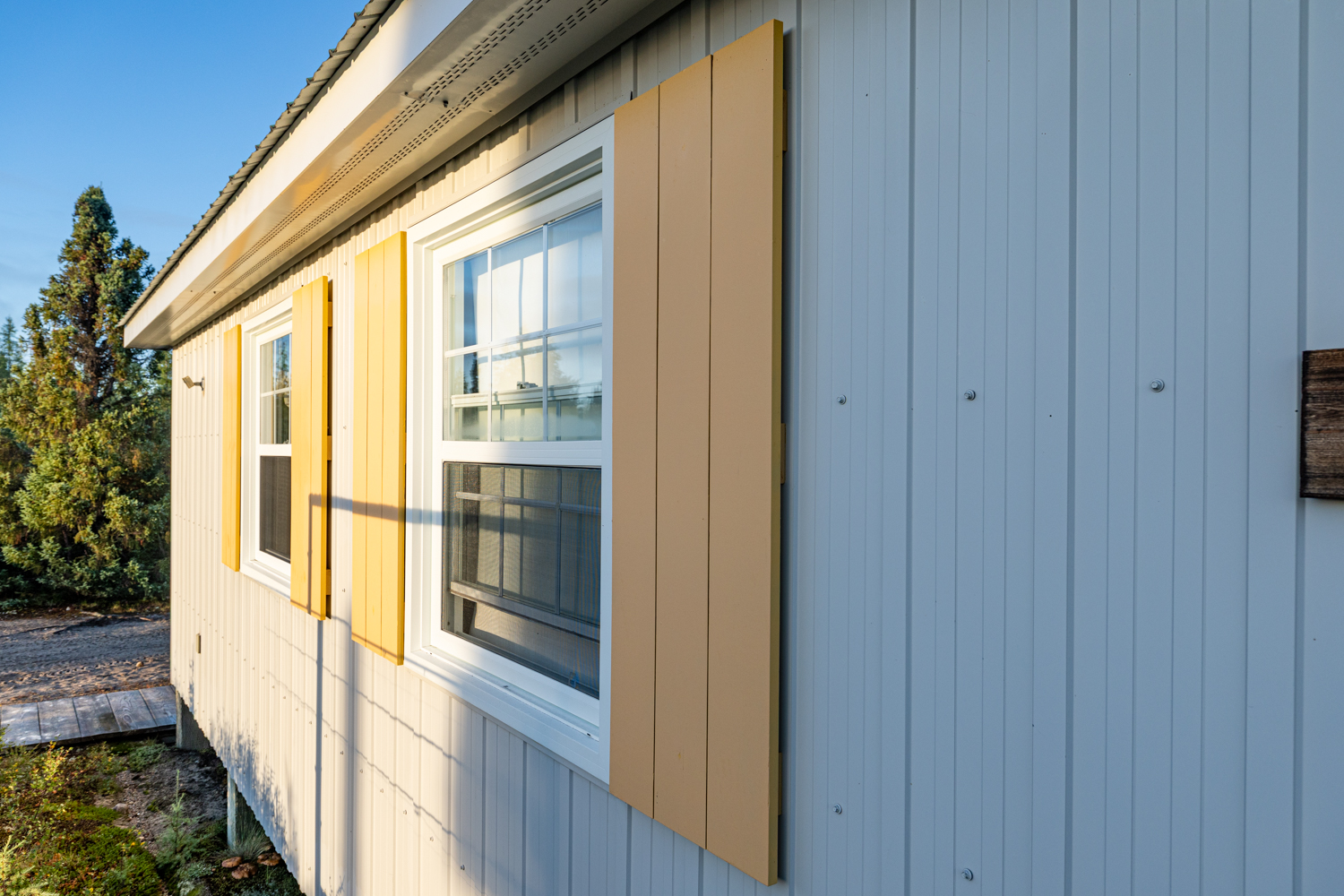
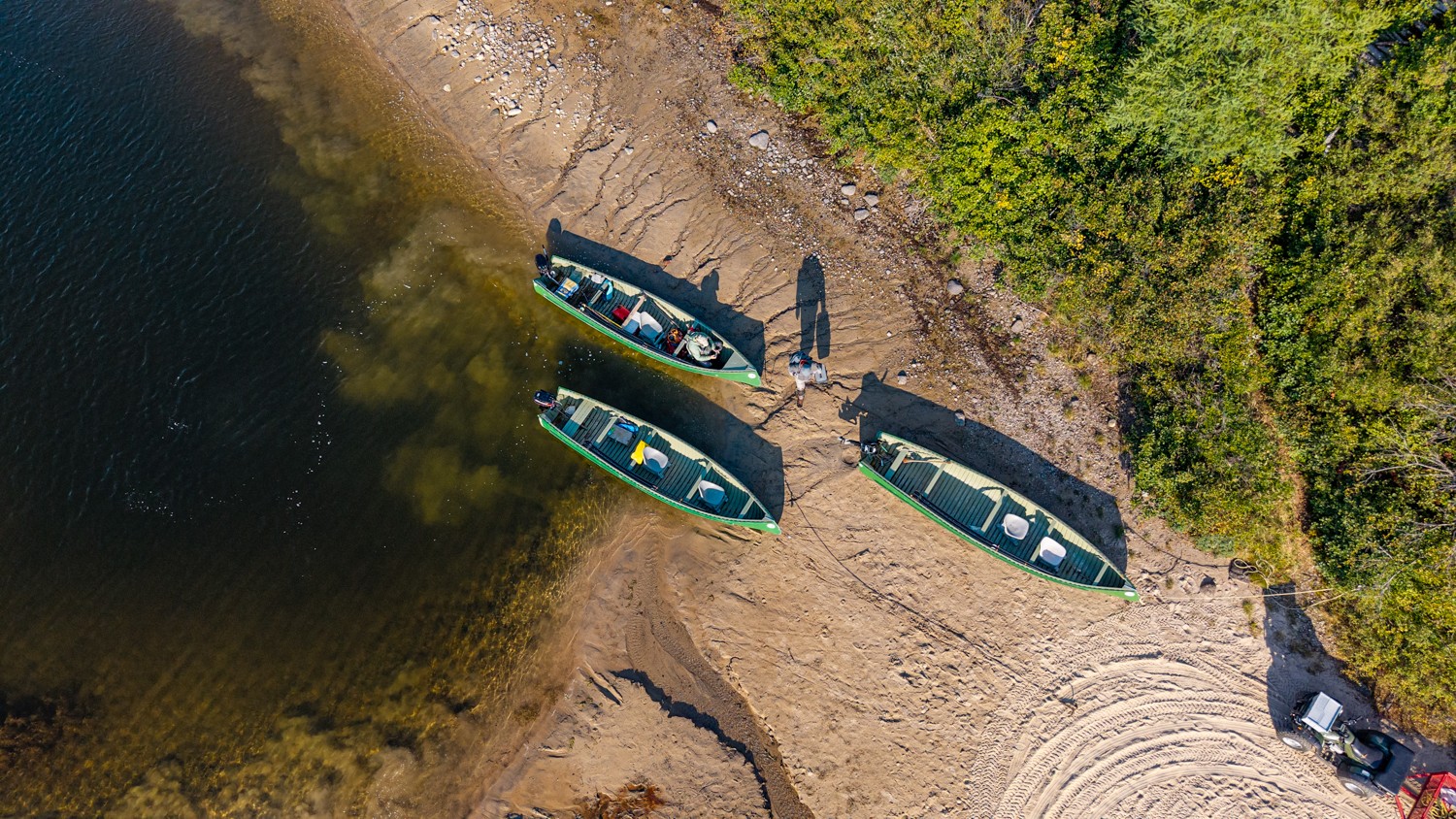
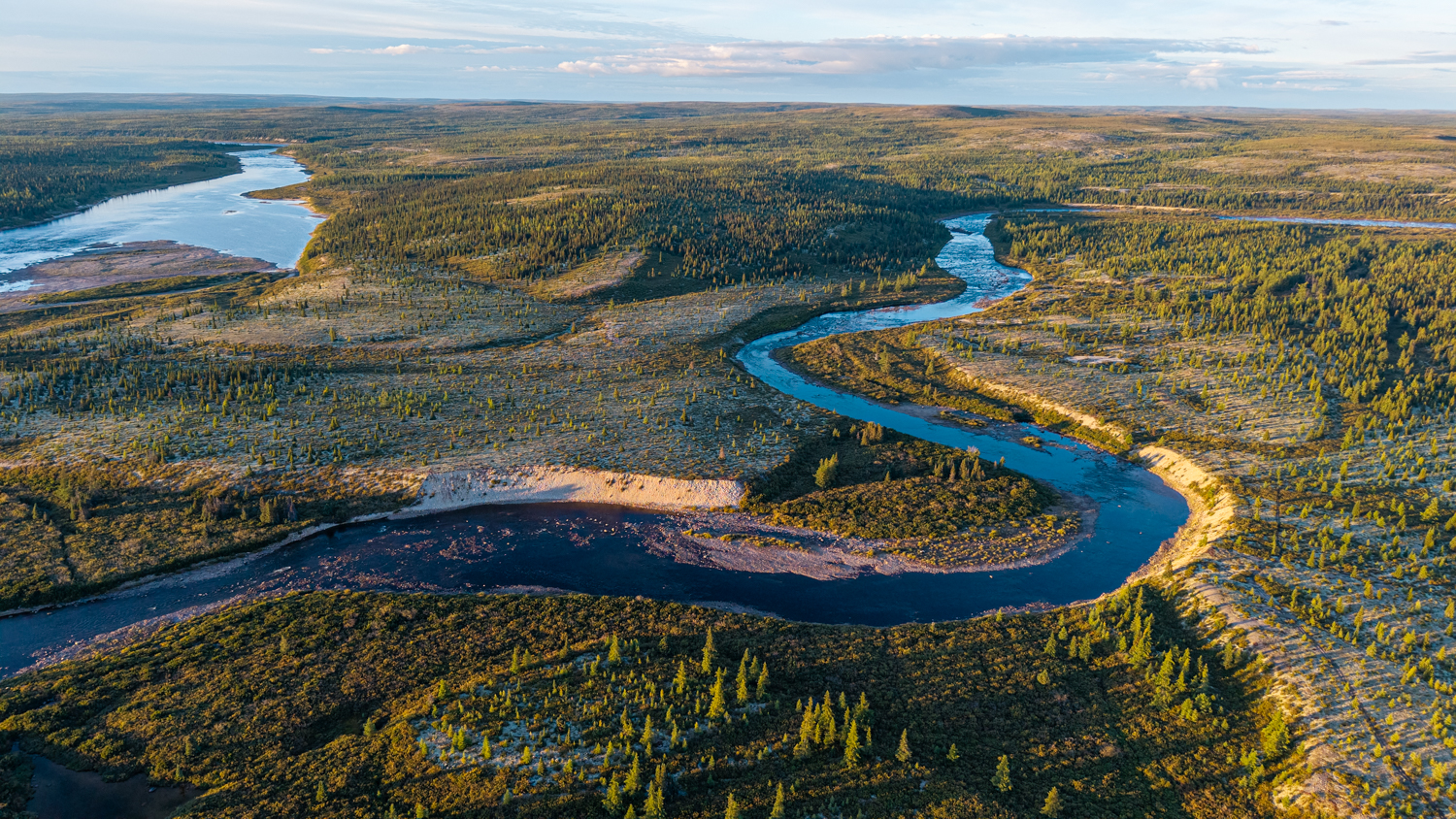
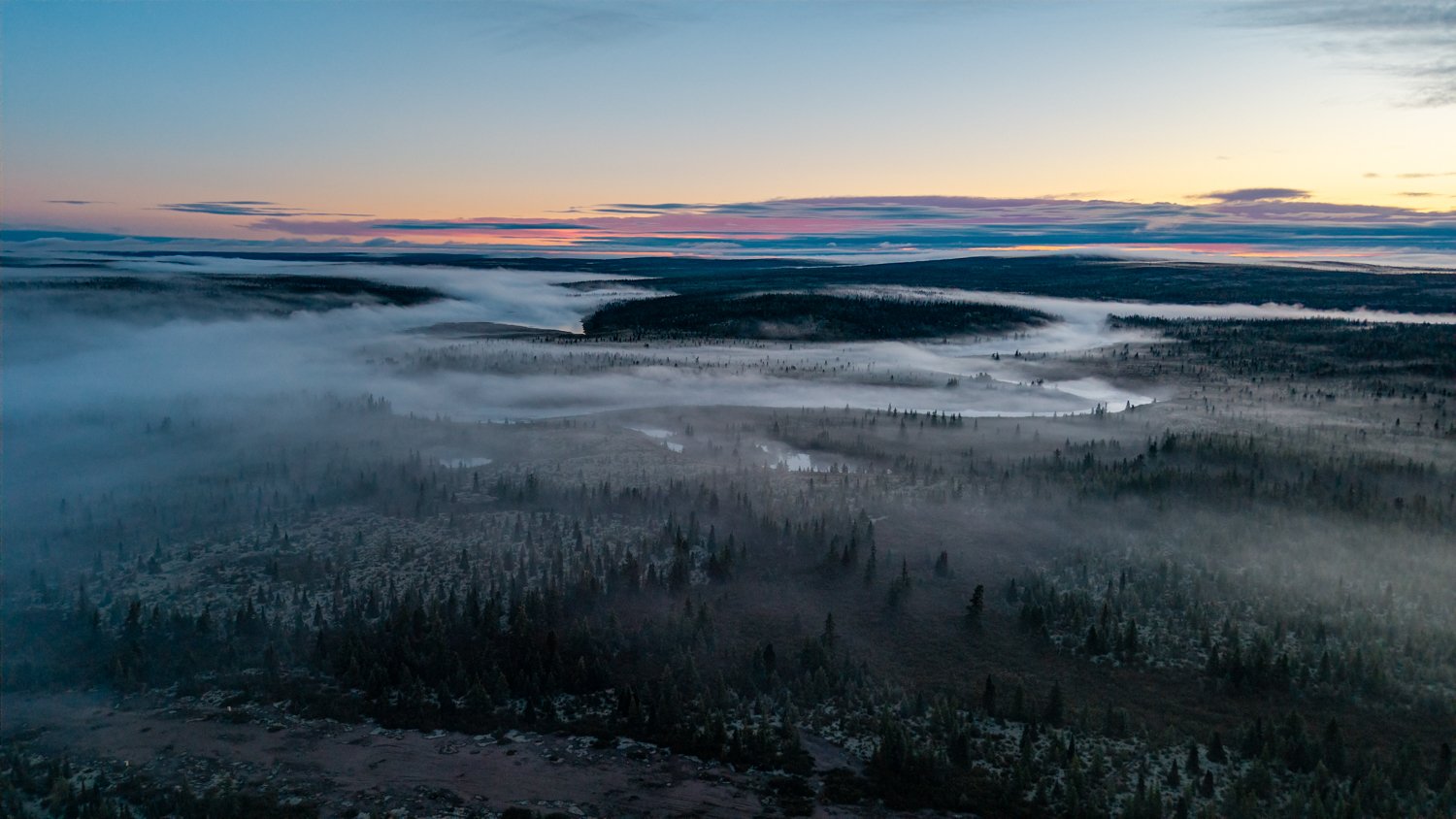
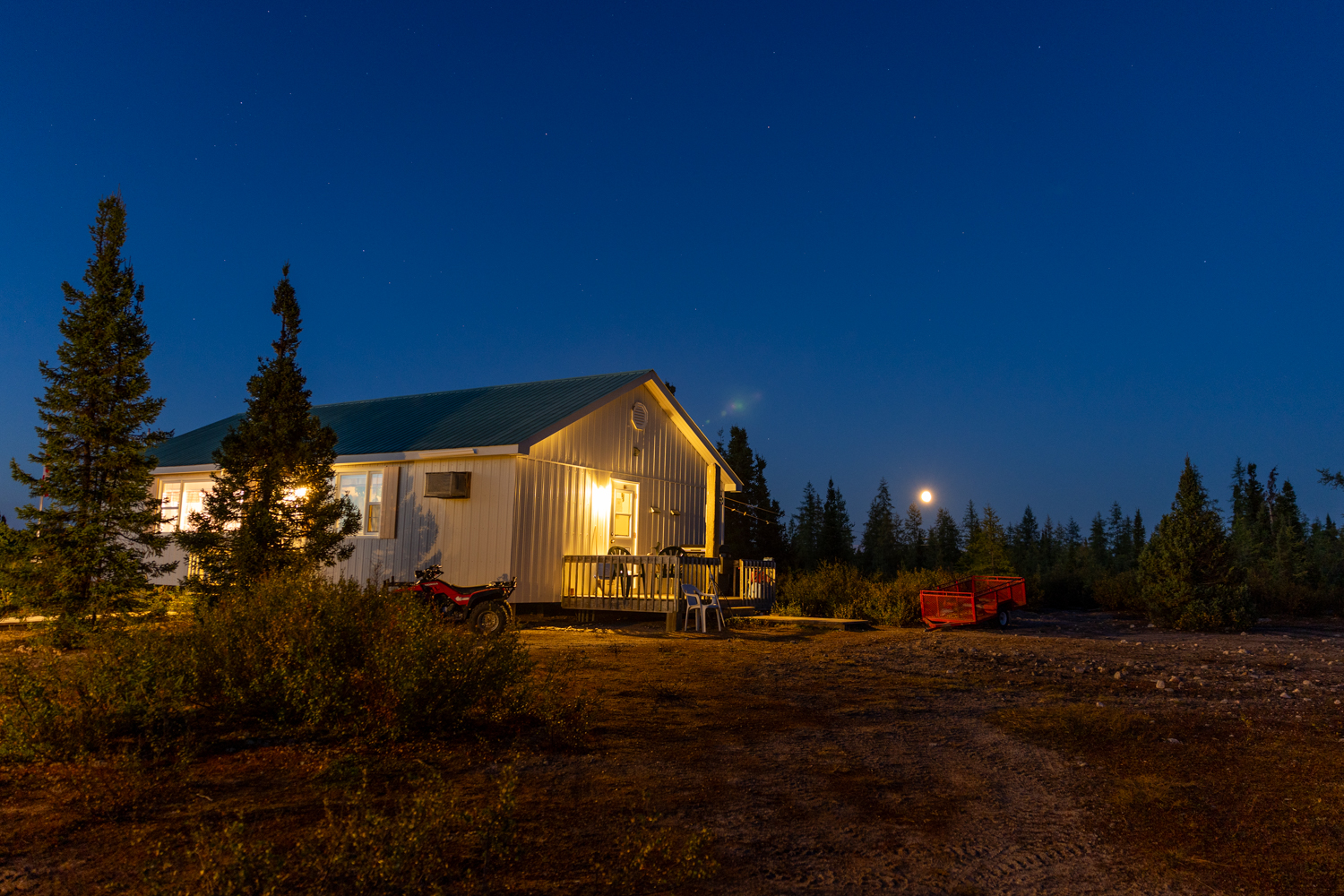
But the whole experience is the greatest souvenir of them all. I am still pinching myself at where I have been, that as a non-Canadian, what I have stumbled across. That in 2026 such a place for Atlantic salmon of all species exists. If it was peacock bass or payara or tiger fish in some far-flung jungle, I would believe it but 200 kms + of wilderness salmon fishing simply blows the mind. Today, as I write, the crew come out of camp, those fish will be left to do what they do entirely unmolested.
This is as wild a place as possible and yet it was so easy to get to and even a pleasure given how nice the people along the way were. I am still finding it hard to believe and I feel beyond privileged to have been and done what I have. A wise Icelandic guide and good friend said that our summers on the water salmon fishing give us is a whole winter of contemplation of what happened and a spring of anticipation of what might happen and there is no better example of this for me than my time of the Delay. So, my advice to all, don’t delay if considering booking the Delay!
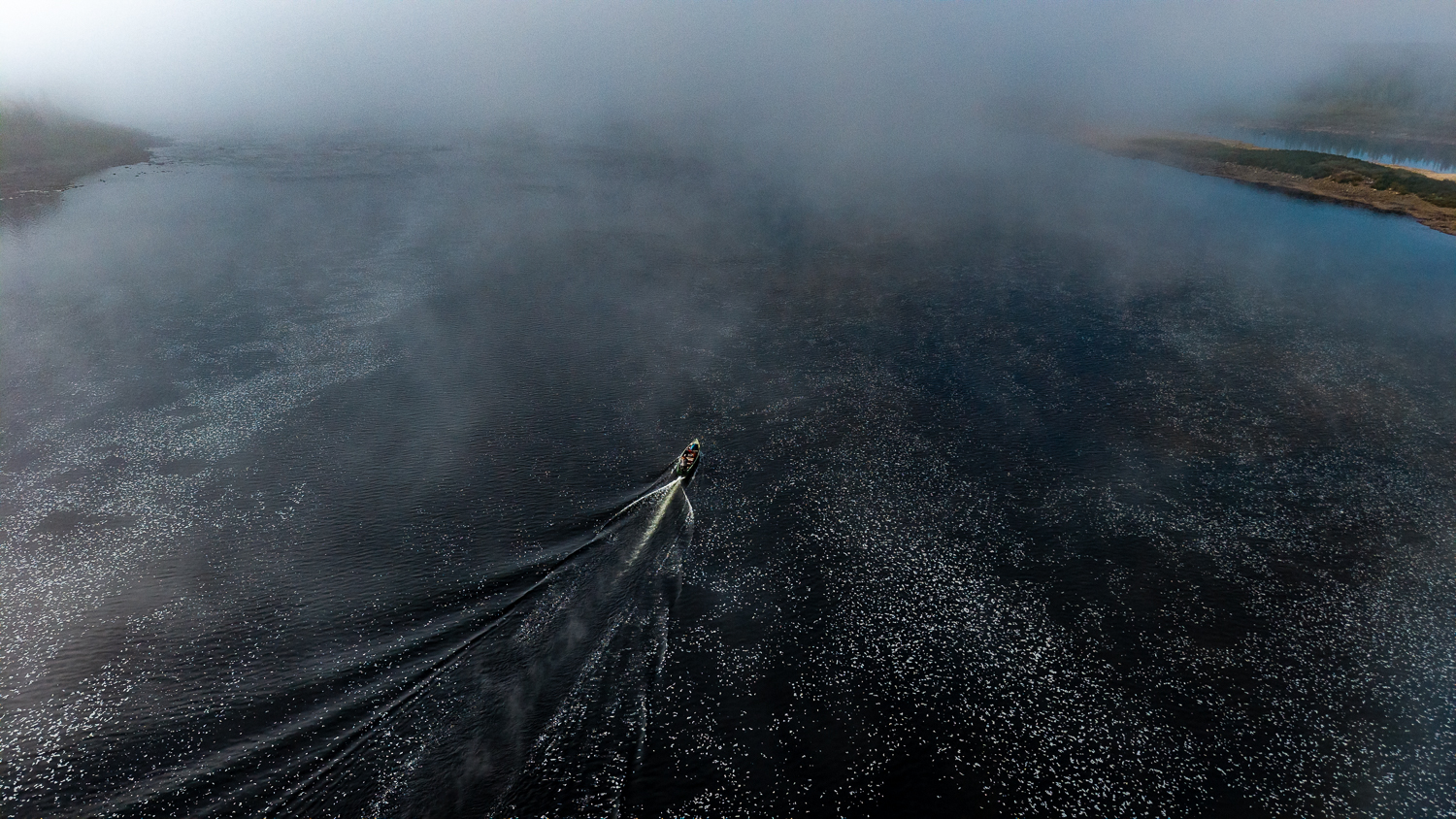
It was not the turbulence of the human flow as I arrived at the airport that struck me… nor the gridlock … or the jerky rhythm and ambient noise… no. I was suddenly numb, cut off from my senses… in my shell, impervious to everything.
Until that moment.
That unpleasant contact under the soles of my shoes preventing me from feeling the ground; its crannies, its suppleness, its inaccuracies… Moving forward without feeling, without thinking. Placing my foot anywhere, without using my senses… Is this really what we call “connection,” “progress,” “evolution”?
Flavie Larouche, Writer and Team Member, Delay River Camp
So, what needs doing to the cabins?
Paint rooms off-white
Pictures on the wall – canvas wrapped over frames
Provide towels
Duvets rather than sleeping bags
Curtains and blinds updated
Four pillows per room – plus spares
Fleece logoed blankets in red or some bright ‘happy’ colour
Suggest guests bring a dressing gown or robe for around their cabin in pre-trip info
Supply shampoo and soap/shower gel – refillable
Spare supplies for people forgetting toothbrushes etc
Kettle in each cabin would be fabulous!
Tea bags and instant coffee in cabins
Information booklet with safety info in each cabin or on the walls
Map of Nunavik and/or the river, or both, on the walls
Anti-mosquito gear provision was good
Some bulbs need replacing
Wood supply great – kindling and cardboard?
Repair some power sockets
Mirror in each room
Hand sanitiser for when generator is off
Print and laminate toilet and safety notices
Mats/carpets for bedroom floor and corridor
Candles for the evening chats
For ladies in camp
Hairdryer
Stock of sanitary products
NB – toilet – non-clear nappy sacks for ladies for toilet paper and sanitary products so they can seal and put in main bin
Lid for toilet paper bin
Main Cabin
Pictures and maps
Maybe blankets on sofas etc
Candles for the evening
Bird and wildlife reference books
Flies and other items for sale
Caps and shirts for sale
Accessible fridge to take drinks
None of the above is going to break the bank or is hard to get done. I should explain that the camp has excellent plumbing (and indeed heating system) but to be on the safe side, used toilet paper and sanitary products are placed in a bin provided. Does not sound nice but not so bad if presented correctly.
end…